Animal behavior's biggest taboo is softening
UC behavioral ecologist talks to the Atlantic about anthropomorphism in science

The Atlantic reached out to a behavioral ecologist at the University of Cincinnati to learn more about attitudes scientists have about anthropomorphism in animal science.
Anthropomorphism is the tendency to attribute human emotions, motivations or characteristics onto animals. Generations of scientists have discouraged this natural inclination to see a bit of themselves in the animals they study.
But scientists told the Atlantic this impulse sometimes can be useful.

UC Assistant Professor Elizabeth Hobson holds a monk parakeet. She and her students study animal societies. Photo/Provided
Hobson studies animals such as monk parakeets in UC's College of Arts and Sciences.
Her studies have found that when a high-ranking parakeet has an extended absence from the colony, it typically gets bullied by the other members upon its return.
Bullying is a concept commonly used to describe human behavior, but it also made for relevant shorthand to describe the bird behavior they were documenting, Hobson told the Atlantic.
“We’re just careful to define exactly what we mean,” she said: “an increase in aggression towards a specific individual from all the other birds in the group.”
Hobson said scientists should use care in making inferences or drawing conclusions through the prism of anthropomorphism.
“We need to be really careful when engaging in any kind of anthropomorphism so that we are not inferring the root cause of a behavior in animals as human-like without evidence and data to back it up,” she said.
“I think it's fine and sometimes helpful to use anthropomorphism as an analogy or a 'what if animals behaved in this situation as a human would' kind of approach. But then as scientists, it's critical to go out and collect data and evidence if we want to explain a behavior in a way that we usually think of as human.”
Likewise, Hobson said, researchers need to be aware of our inclination to anthropomorphize to prevent bias from creeping into data collection or analysis.
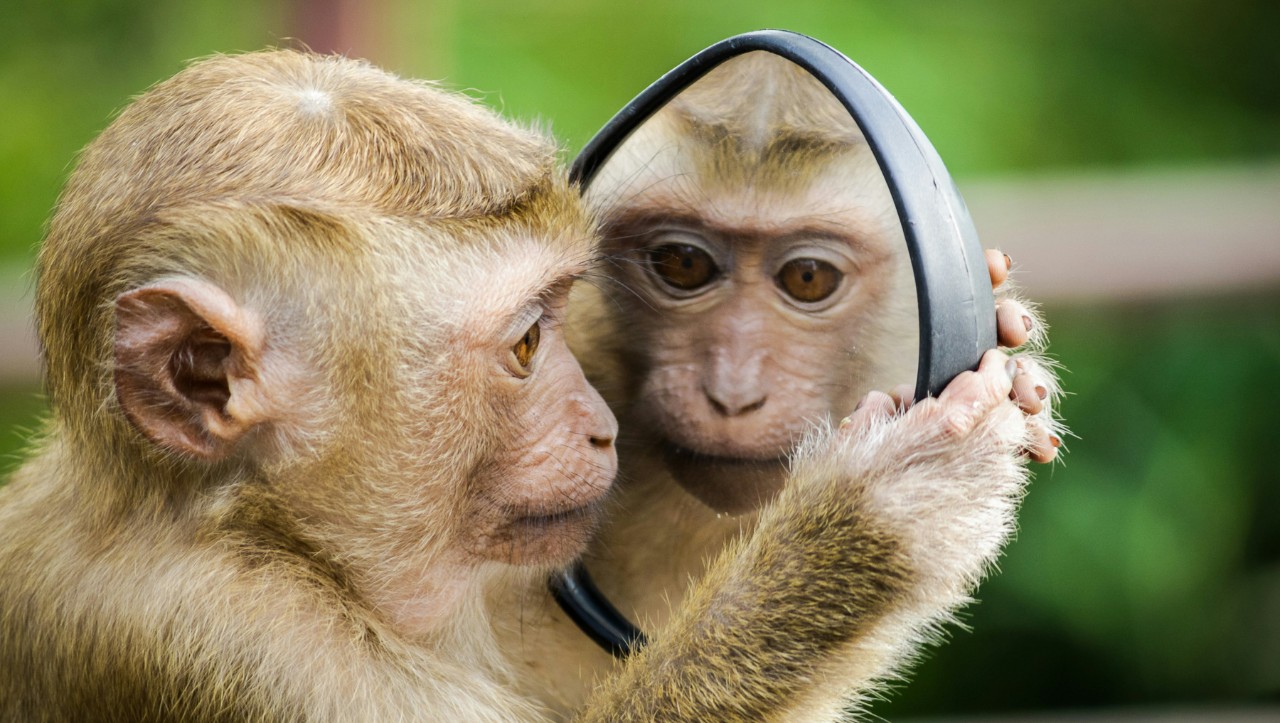
Featured image at top: Scientists discuss the risks and benefits of anthropomorphism. Photo/Andre Mouton/Unsplash

UC Assistant Professor Elizaeth Hobson studies animal behavior in her biology lab. Photo/Andrew Higley/UC Marketing + Brand
Related Stories
Sugar overload killing hearts
November 10, 2025
Two in five people will be told they have diabetes during their lifetime. And people who have diabetes are twice as likely to develop heart disease. One of the deadliest dangers? Diabetic cardiomyopathy. But groundbreaking University of Cincinnati research hopes to stop and even reverse the damage before it’s too late.
Is going nuclear the solution to Ohio’s energy costs?
November 10, 2025

The Ohio Capital Journal recently reported that as energy prices continue to climb, economists are weighing the benefits of going nuclear to curb costs. The publication dove into a Scioto Analysis survey of 18 economists to weigh the pros and cons of nuclear energy. One economist featured was Iryna Topolyan, PhD, professor of economics at the Carl H. Lindner College of Business.
App turns smartwatch into detector of structural heart disease
November 10, 2025

An app that uses an AI model to read a single-lead ECG from a smartwatch can detect structural heart disease, researchers reported at the 2025 Scientific Sessions of the American Heart Association. Although the technology requires further validation, researchers said it could help improve the identification of patients with heart failure, valvular conditions and left ventricular hypertrophy before they become symptomatic, which could improve the prognosis for people with these conditions.