Medscape: Skin adverse events rare after immunotherapy to treat skin cancers

Medscape highlighted University of Cincinnati research published in JAMA Dermatology that found certain skin adverse events were rare following immunotherapy treatments for certain skin cancers.
"Programmed cell death 1 (PD-1) and programmed cell death ligand 1 (PD-L1) inhibitors are commonly used drugs for the treatment of various cancers," said Pushkar Aggarwal, MD, corresponding author and medical resident/fellow in UC's College of Medicine. "Having knowledge regarding possible associated skin reactions is vital for clinicians to guide management of the skin reaction and whether an adjustment is needed for the PD-1/PD-L1 inhibitors."
The researchers reviewed adverse event reports for patients treated with PD-1 and PD-L1 treatments between January 2004 and May 2023 to identify whether significant signals exist between PD-1/PD-L1 inhibitors and skin tumors keratoacanthoma and cutaneous squamous cell carcinoma (cSCC).
"For both keratoacanthoma and cSCC, significant signals were found with PD-1/PD-L1 inhibitors," Aggarwal said. But, out of 158,000 cases in the review, the data showed only 43 patients developing keratocanthoma and 83 developing cSCC, which highlights the conditions are "relatively rare adverse events."
Aggarwal said case reports, case-control trials and randomized clinical trials are needed to confirm the results of this study.
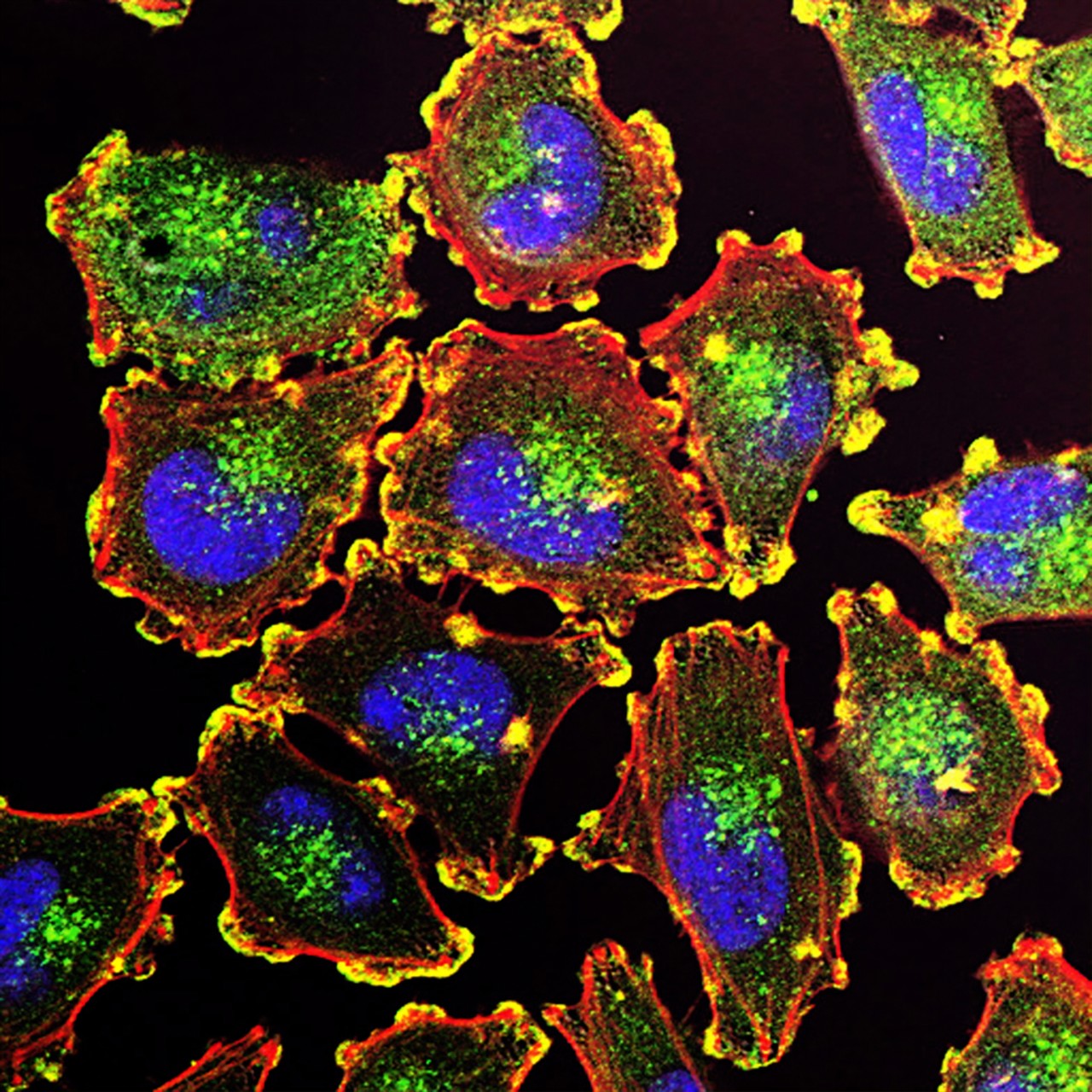
Featured photo at top of metastatic melanoma cells. Photo/National Cancer Institute.
Related Stories
Sugar overload killing hearts
November 10, 2025
Two in five people will be told they have diabetes during their lifetime. And people who have diabetes are twice as likely to develop heart disease. One of the deadliest dangers? Diabetic cardiomyopathy. But groundbreaking University of Cincinnati research hopes to stop and even reverse the damage before it’s too late.
Is going nuclear the solution to Ohio’s energy costs?
November 10, 2025

The Ohio Capital Journal recently reported that as energy prices continue to climb, economists are weighing the benefits of going nuclear to curb costs. The publication dove into a Scioto Analysis survey of 18 economists to weigh the pros and cons of nuclear energy. One economist featured was Iryna Topolyan, PhD, professor of economics at the Carl H. Lindner College of Business.
App turns smartwatch into detector of structural heart disease
November 10, 2025

An app that uses an AI model to read a single-lead ECG from a smartwatch can detect structural heart disease, researchers reported at the 2025 Scientific Sessions of the American Heart Association. Although the technology requires further validation, researchers said it could help improve the identification of patients with heart failure, valvular conditions and left ventricular hypertrophy before they become symptomatic, which could improve the prognosis for people with these conditions.