Healthline: UC expert discusses colorectal cancer

The University of Cincinnati's Carla Justiniano spoke with Healthline about colorectal cancer in an article about a woman diagnosed with the cancer when she was seven months pregnant.
Genetic testing for Amanda Webb's baby revealed abnormalities, but further testing found the baby was healthy and Webb had stage 4 colon cancer. She had previously been diagnosed with stage IA malignant melanoma.
Justiniano, MD, said a previous history of several cancers is associated with colon cancer, but malignant melanoma is not a common one. She noted rates in colorectal cancer are rising among young people.
“[This] is likely explained by a birth cohort effect where only persons born after the 1950s experienced the increasing rates of colorectal cancer, meaning these people have had different exposures to foods and environmental factors that impact the microbiome and inflammation in their colon, which are thereby thought to drive carcinogenesis,” said Justiniano, a colorectal surgeon at the University of Cincinnati Cancer Center and assistant professor in UC's College of Medicine.
It is recommended for healthy patients to begin getting colonoscopies at age 45. Those with a first-degree relative who has had colorectal cancer should begin screening 10 years earlier than their family member's diagnosis.
“Patients with a diagnosis, especially when caught at screening, are often in disbelief because they feel fine, but in fact, many colon cancer patients are caught early and have zero symptoms, which highlights the importance of a screening colonoscopy,” she said. “There are many cancers that we cannot screen for, but colorectal cancer is not one of those, and thus we should be appreciative of that and take advantage of it,” said Justiniano.
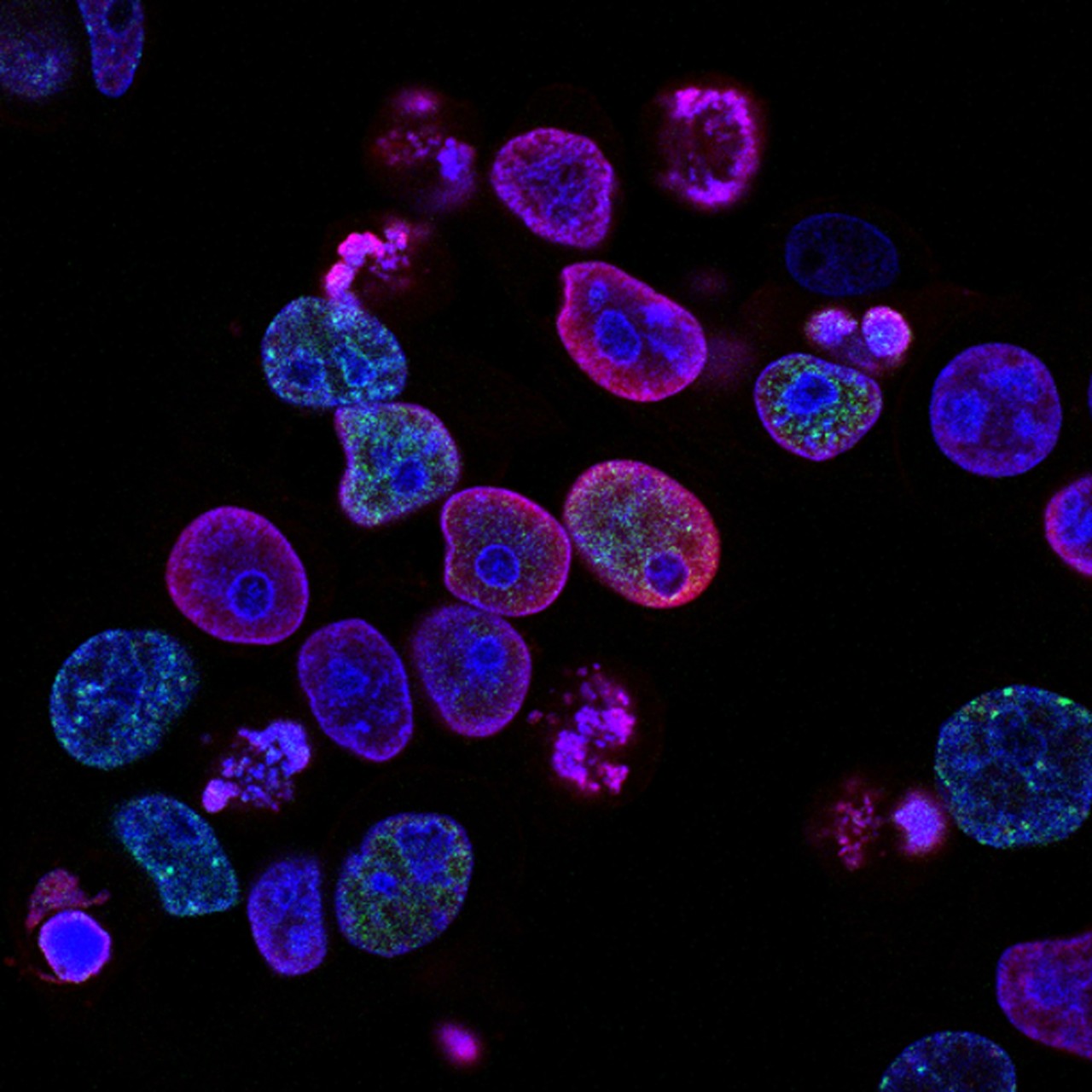
Featured photo at top of colorectal cancer cells.
Related Stories
Sugar overload killing hearts
November 10, 2025
Two in five people will be told they have diabetes during their lifetime. And people who have diabetes are twice as likely to develop heart disease. One of the deadliest dangers? Diabetic cardiomyopathy. But groundbreaking University of Cincinnati research hopes to stop and even reverse the damage before it’s too late.
Is going nuclear the solution to Ohio’s energy costs?
November 10, 2025

The Ohio Capital Journal recently reported that as energy prices continue to climb, economists are weighing the benefits of going nuclear to curb costs. The publication dove into a Scioto Analysis survey of 18 economists to weigh the pros and cons of nuclear energy. One economist featured was Iryna Topolyan, PhD, professor of economics at the Carl H. Lindner College of Business.
App turns smartwatch into detector of structural heart disease
November 10, 2025

An app that uses an AI model to read a single-lead ECG from a smartwatch can detect structural heart disease, researchers reported at the 2025 Scientific Sessions of the American Heart Association. Although the technology requires further validation, researchers said it could help improve the identification of patients with heart failure, valvular conditions and left ventricular hypertrophy before they become symptomatic, which could improve the prognosis for people with these conditions.