WCPO: UC-backed startup aims to use AI to detect heart disease
Genexia sees data available through mammograms as key to early detection

A University of Cincinnati-backed startup is developing explainable artificial intelligence to better diagnose coronary artery disease risk in women, WCPO reported.
Cardiovascular disease is the No. 1 killer of women in the United States and worldwide. In the U.S. alone, 500,000 women die annually as a result of heart disease.
Genexia, founded by Kelly Cohen, Dino Martis and Anoop Sathyan, aims to use explainable AI in mammograms for early detection of coronary artery disease to significantly reduce deaths and quality of life degradation for women.
“Today, 500,000 women die of heart attacks,” Martis, Genexia’s CEO, said. “I would love to see in the future, we cut that number in half because of innovations such as ours. That would make the world a better place to live in.”
Genexia has received a lot of investor interest and once funding has been secured, a clinical trial will enroll 2,000 women, collecting data that will be used to train explainable AI models to identify breast density and diagnose coronary artery disease risk through information found in mammograms.
“[Women] do not show the symptoms that men do,” said Cohen, Genexia chairman of the board, director of AI Bio Lab at Digital Futures and the Brian H. Rowe Endowed Chair in aerospace engineering at UC’s College of Engineering and Applied Science. “But they do have mammograms more often than men. Now we have the opportunity because that evidence is there.”
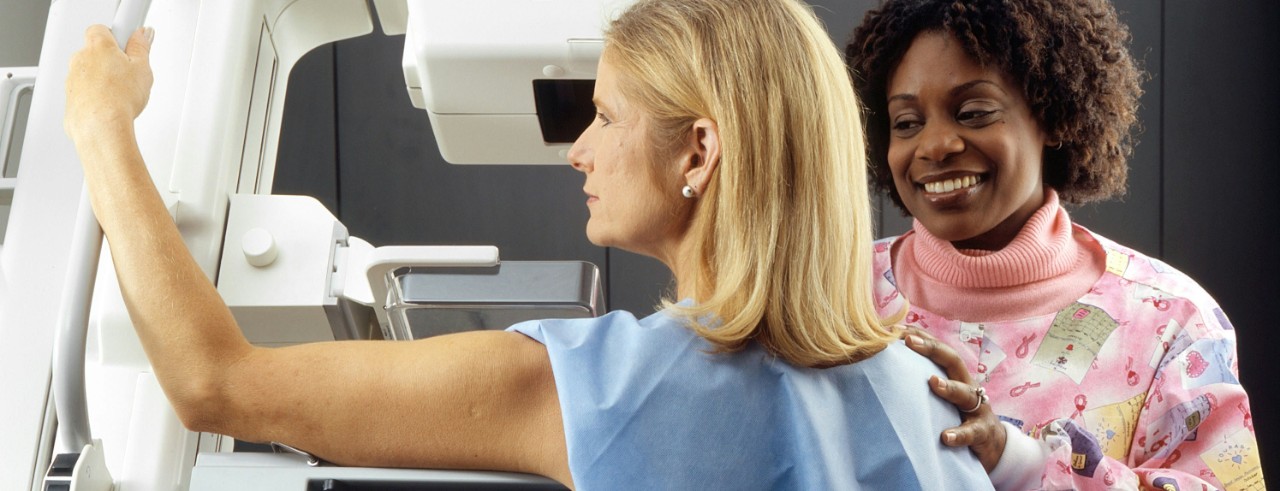
Featured image at top: A woman receives a mammogram. Photo/Rhoda Baer, National Cancer Institute via Unsplash
Innovation Lives Here
The University of Cincinnati is leading public urban universities into a new era of innovation and impact. Our faculty, staff and students are saving lives, changing outcomes and bending the future in our city's direction. Next Lives Here.
Related Stories
Sugar overload killing hearts
November 10, 2025
Two in five people will be told they have diabetes during their lifetime. And people who have diabetes are twice as likely to develop heart disease. One of the deadliest dangers? Diabetic cardiomyopathy. But groundbreaking University of Cincinnati research hopes to stop and even reverse the damage before it’s too late.
Is going nuclear the solution to Ohio’s energy costs?
November 10, 2025

The Ohio Capital Journal recently reported that as energy prices continue to climb, economists are weighing the benefits of going nuclear to curb costs. The publication dove into a Scioto Analysis survey of 18 economists to weigh the pros and cons of nuclear energy. One economist featured was Iryna Topolyan, PhD, professor of economics at the Carl H. Lindner College of Business.
App turns smartwatch into detector of structural heart disease
November 10, 2025

An app that uses an AI model to read a single-lead ECG from a smartwatch can detect structural heart disease, researchers reported at the 2025 Scientific Sessions of the American Heart Association. Although the technology requires further validation, researchers said it could help improve the identification of patients with heart failure, valvular conditions and left ventricular hypertrophy before they become symptomatic, which could improve the prognosis for people with these conditions.