Newsweek: UC professor explains likelihood of eruption in Iceland
Iceland ordered evacuations of 3,600 people in a coastal town

Newsweek turned to a University of Cincinnati geosciences professor to explain the likelihood of a volcanic eruption in southern Iceland where officials asked 3,600 residents to evacuate a coastal village.
Professor Thomas Algeo in UC's College of Arts and Sciences said the volcano has been active for more than two years and recently caused thousands of small earthquakes that have opened fissures in roads in Grindavik about 50 miles south of the nation's capital. Scientists have detected higher-than-normal levels of sulfur dioxide in the air.
But in the weeks since the evacuation, scientists said the likelihood of an eruption is declining.
Algeo told Newsweek that there was no simple answer to whether the worst of the volcanic activity in the region is over for now.
"After an 800-year interval of no eruptions in this region, activity resumed in the spring of 2021: for six months during 2021 and for briefer intervals during the summers of 2022 and 2023," he said.
"The chances are that, even if the present activity tapers off, there will be further eruptions in the Reykjanes Peninsula region during the coming years."

UC Professor Thomas Algeo said an eruption appears imminent in Grindavik, Iceland. Photo/Andrew Higley/UC Marketing + Brand
Ash clouds from an Icelandic volcanic eruption forced weeks of widespread aviation detours in Europe in 2010. It was the largest peacetime closure of European airspace. But Iceland officials don't expect an explosive eruption that creates huge plumes of ash this time.
UC has several ties to Iceland. Some faculty members hail from “the land of fire and ice.” UC's Honors Program offers a writing class in Iceland to teach the fundamentals of travel writing.
Algeo recalled a memorable biking trip he took around the island when he was in college.
“You can see beautiful waterfalls of every imaginable kind there,” he said.
Algeo also talked to Fox19 and 700-WLW's “Eddie & Rocky Show” to put the geologic spectacle into context. Algeo said most eruptions in Iceland in recorded history have been relatively small.
“The real danger is if the lava heads in the direction of Grindavik. They're building gravel ridges to divert the lava,” Algeo told hosts Eddie Fingers and Jason Williams.
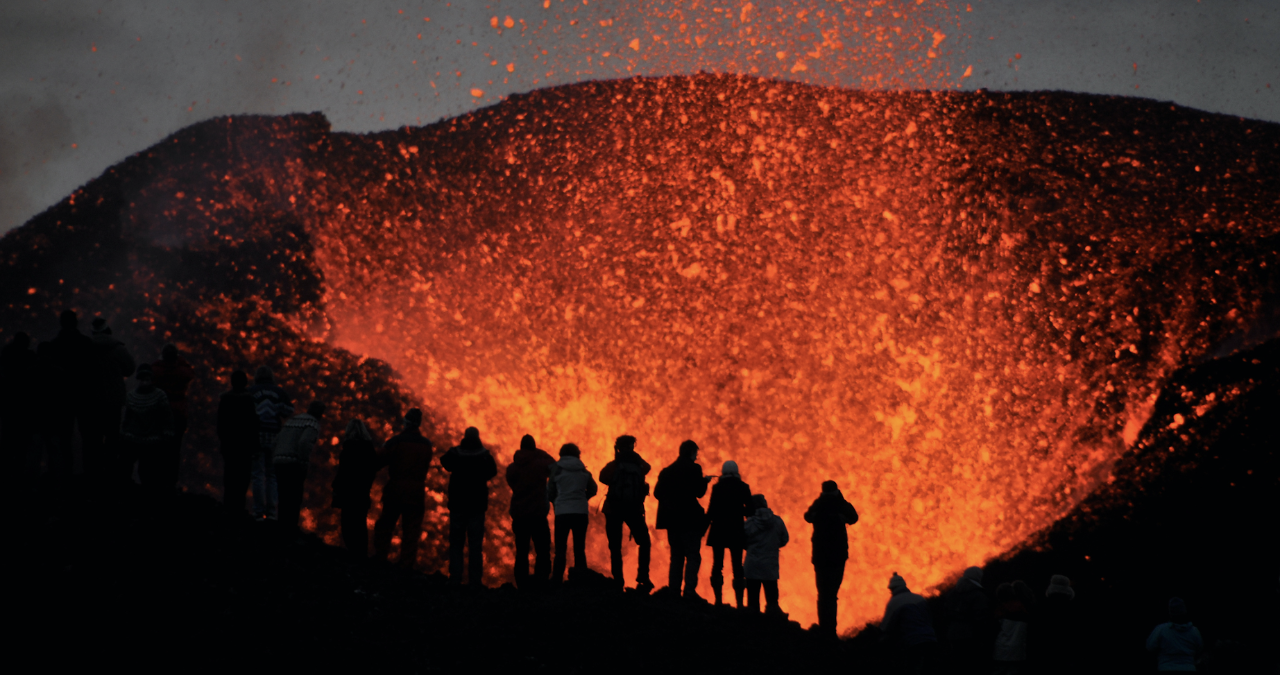
Featured image at top: Iceland's Eyjafjallajökull volcano erupts in 2010. Photo/TrueCapture

UC Professor Thomas Algeo told Fox19 a volcanic eruption is imminent in southern Iceland. Photo/Andrew Higley/UC Marketing + Brand
Related Stories
Sugar overload killing hearts
November 10, 2025
Two in five people will be told they have diabetes during their lifetime. And people who have diabetes are twice as likely to develop heart disease. One of the deadliest dangers? Diabetic cardiomyopathy. But groundbreaking University of Cincinnati research hopes to stop and even reverse the damage before it’s too late.
Is going nuclear the solution to Ohio’s energy costs?
November 10, 2025

The Ohio Capital Journal recently reported that as energy prices continue to climb, economists are weighing the benefits of going nuclear to curb costs. The publication dove into a Scioto Analysis survey of 18 economists to weigh the pros and cons of nuclear energy. One economist featured was Iryna Topolyan, PhD, professor of economics at the Carl H. Lindner College of Business.
App turns smartwatch into detector of structural heart disease
November 10, 2025

An app that uses an AI model to read a single-lead ECG from a smartwatch can detect structural heart disease, researchers reported at the 2025 Scientific Sessions of the American Heart Association. Although the technology requires further validation, researchers said it could help improve the identification of patients with heart failure, valvular conditions and left ventricular hypertrophy before they become symptomatic, which could improve the prognosis for people with these conditions.