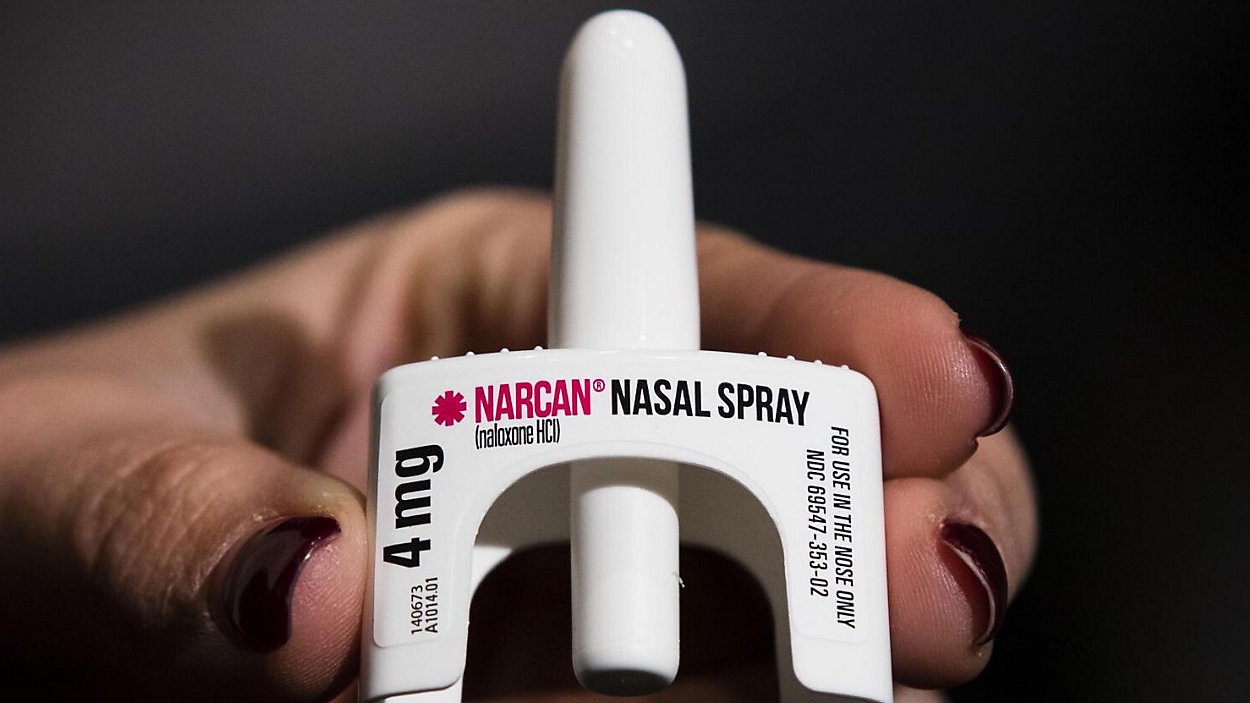
Spectrum News: University of Cincinnati study looks at impact of Narcan distribution
Study also reported on by Local 12

Research from the University of Cincinnati investigates the impact of a community naloxone distribution collaborative in Hamilton County from the end of 2017 until the end of 2019. The study, published in PLOS One, shows that widespread community distribution of naloxone did not significantly impact the median monthly opioid overdose rates.
Spectrum News reported on the research, interviewing lead researcher, Caroline Freiermuth, MD, of the Department of Emergency Medicine in the UC College of Medicine.

Caroline Freiermuth, MD, of the Department of Emergency Medicine in the UC College of Medicine/Photo/Colleen Kelley/UC Marketing + Brand
“We found that over the course of the two-year project where we were trying to distribute naloxone to as many communities possible, the overdose death rate really did not change," said Freiermuth. "However, we did some modeling and we would have expected to see the opioid overdose death rate go up. And so we like to think that handing out the naloxone actually kept that at a steady rate.”
Freiermuth told Spectrum News that one thing the study demonstrates is that much work needs to be done in this area.
"We need to make sure that everyone has access to this medication, knows how to use this medication, realizes how easy and impactful it is," she said. "This is such a safe medication. It’s very easy to administer. It works within seconds and really can help bring people back from death.”
Local 12 also reported on the research. See that coverage here.
Read more about the study here.
Lead photo/Mark Schiefelbein/AP photo
Next Lives Here
The University of Cincinnati is classified as a Research 1 institution by the Carnegie Commission and is ranked in the National Science Foundation's Top-35 public research universities. UC's graduate students and faculty investigate problems and innovate solutions with real-world impact. Next Lives Here.
Related Stories
Sugar overload killing hearts
November 10, 2025
Two in five people will be told they have diabetes during their lifetime. And people who have diabetes are twice as likely to develop heart disease. One of the deadliest dangers? Diabetic cardiomyopathy. But groundbreaking University of Cincinnati research hopes to stop and even reverse the damage before it’s too late.
Is going nuclear the solution to Ohio’s energy costs?
November 10, 2025

The Ohio Capital Journal recently reported that as energy prices continue to climb, economists are weighing the benefits of going nuclear to curb costs. The publication dove into a Scioto Analysis survey of 18 economists to weigh the pros and cons of nuclear energy. One economist featured was Iryna Topolyan, PhD, professor of economics at the Carl H. Lindner College of Business.
App turns smartwatch into detector of structural heart disease
November 10, 2025

An app that uses an AI model to read a single-lead ECG from a smartwatch can detect structural heart disease, researchers reported at the 2025 Scientific Sessions of the American Heart Association. Although the technology requires further validation, researchers said it could help improve the identification of patients with heart failure, valvular conditions and left ventricular hypertrophy before they become symptomatic, which could improve the prognosis for people with these conditions.