Study: Time is of the essence when saving skin during FLASH radiotherapy
A study shows that intervals in beam treatment decrease the skin-saving aspects of the procedure

A published study by researchers at the University of Cincinnati Cancer Center and Cincinnati Children’s shows that multiple beams and intervals in delivery during FLASH proton therapy treatment reduced skin-saving effects in preclinical models.
The study was published in the International Journal of Radiation Oncology, Biology, Physics.
FLASH is an experimental mode of delivering radiation therapy for cancer that can be delivered to a patient in less than one second and which can be over 100 times faster than conventional radiation therapy.
Research in the laboratory suggests that FLASH may be safer than standard forms of radiation and, in many cases, causes fewer side effects, including irritation or burning of the skin.

Mathieu Sertorio, PhD, corresponding author and a member of the basic science research program within the University of Cincinnati Cancer Center. Photo/Provided by Sertorio.
“FLASH proton pencil-beam-scanning has shown a reduction in skin toxicity for preclinical models when delivered in a single, uninterrupted high dose,” says Mathieu Sertorio, PhD, corresponding author on the paper and a member of the basic science research program within the Center. “However, for treatment of patients, multiple beams are required to diminish the exposure of normal tissue to radiation and to make sure the entire area identified for treatment is targeted. The administration of these beams are separated by minutes to allow patient and equipment repositioning.”
In this study, researchers from the center delivered a particular radiation dose of FLASH radiotherapy in either a single or multiple beams in one area of a model and observed skin tissue over the course of 16 weeks at the Cincinnati Children’s/University of Cincinnati Medical Center Proton Therapy Center. This proton therapy center has the only research-dedicated room in the world.
“The treatment was delivered as one, two or three equal beams with an interruption of two minutes simulating the clinical experience of patients,” explained Sertorio.
Sertorio says that the single beam delivery showed a maximum benefit to skin, but when it was interrupted for two minutes and then readministered in the same area, it reduced the FLASH skin-saving effect. After two interruptions, the skin tissue-sparing effect was further eliminated.
“Our results indicate that the FLASH skin-sparing effect in areas of beam overlap were diminished by multiple beams as opposed to single beams,” he says. “This study suggests the number of beams and the spatial arrangement of those beams are important parameters for FLASH studies. Furthermore, the effect of multibeam delivery is likely different for different organs of interest.”
"This study is important because it informs the clinical translation of FLASH radiotherapy, with respect to beam delivery modalities, treatment planning and radiation prescriptions,” says co-author Anthony Mascia, PhD, of Cincinnati Children’s. “We need to identify where FLASH works and where FLASH doesn't work to move forward."
Innovation Lives Here
The University of Cincinnati is leading public urban universities into a new era of innovation and impact. Our faculty, staff and students are saving lives, changing outcomes and bending the future in our city's direction. Next Lives Here.
This research was funded by Varian, a Siemens Healthineers company. Sertorio, as well as co-investigators Mascia and John Perentesis, MD, from Cincinnati Children’s report research grants from Varian.
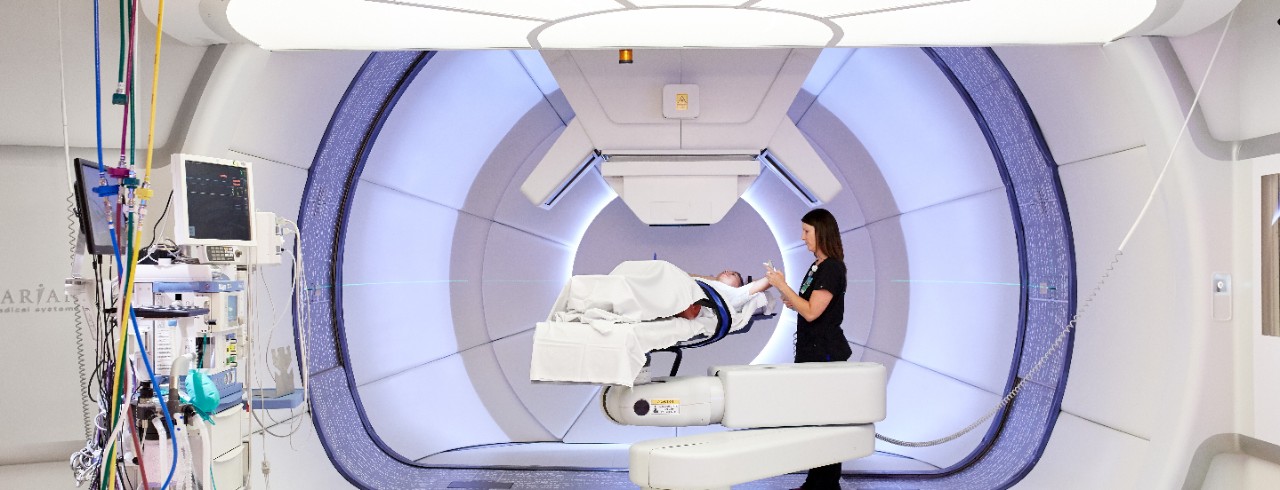
Featured photo of radiation therapist situating someone in one of the gantries at the Proton Therapy Center. Photo/Cincinnati Children's.
Related Stories
Sugar overload killing hearts
November 10, 2025
Two in five people will be told they have diabetes during their lifetime. And people who have diabetes are twice as likely to develop heart disease. One of the deadliest dangers? Diabetic cardiomyopathy. But groundbreaking University of Cincinnati research hopes to stop and even reverse the damage before it’s too late.
App turns smartwatch into detector of structural heart disease
November 10, 2025

An app that uses an AI model to read a single-lead ECG from a smartwatch can detect structural heart disease, researchers reported at the 2025 Scientific Sessions of the American Heart Association. Although the technology requires further validation, researchers said it could help improve the identification of patients with heart failure, valvular conditions and left ventricular hypertrophy before they become symptomatic, which could improve the prognosis for people with these conditions.
Combination immunotherapy helps overcome melanoma treatment resistance
November 10, 2025

MSN highlighted research led by the University of Cincinnati Cancer Center's Trisha Wise-Draper showing a combination of immunotherapy medications can activate a robust immune response and help overcome treatment resistance in patients with refractory melanoma.