PBS NewsHour: Why tracking these pollution indicators is key after the East Palestine train derailment
UC expert says after such a disaster, a coordinated effort to determine exposure is the key

Two months after a train carrying hazardous chemicals derailed in East Palestine, Ohio, state and federal agencies are monitoring air, water and soil samples in and around the derailment site for signs of pollution. Some are wondering how long will those steps be necessary to ensure the safety of the community?
In a story produced by PBS NewsHour, one of the experts interviewed was Glenn Talaska, PhD, professor emeritus in the Department of Environmental and Public Health Sciences in the UC College of Medicine.
Talaska was chosen by Ohio Sens. Sherrod Brown and J.D. Vance to offer his expert take on what a robust public health response in the community should look like. He said he thinks in the aftermath of a disaster, a coordinated effort to get “a better handle on exposure” among residents is key.

Glenn Talaska, PhD, professor emeritus in the Department of Environmental and Public Health Sciences/Photo/Colleen Kelley/UC Marketing + Brand
“It’s a relatively easy process of just collecting a urine sample from individuals who you may be evacuating, getting a sample from them so that we could assess – with whatever biomarkers are going to be available and appropriate – what the exposures were,” Talaska said.
Immediate biomonitoring after disasters like the East Palestine train derailment would both help fill in gaps in exposure assessments in subsequent epidemiological studies, Talaska said. CNN reported in late March that the Ohio Department of Health was poised to offer blood and urine testing to first responders who worked at the derailment site.
The lingering uncertainty in the absence of that type of data collection exacerbates fear and anxiety about their long-term future, he added. But quick-turnaround biomonitoring wasn’t pursued in East Palestine or, generally, during the myriad similar crises that have come before or after it.
That’s because it’s not mandatory for officials to incorporate tools that can help assess exposure early on – like urine sampling – as part of their standard practice in the aftermath of disasters like the one in East Palestine, Talaska said. That’s a problem, in his view, given that the incident in East Palestine is not an isolated event.
“It will happen again. We will have some sort of chemical exposure from this or that or the other thing that we have to deal with as a nation,” he said. “And I think the key takeaway is that we’re not quite ready.”
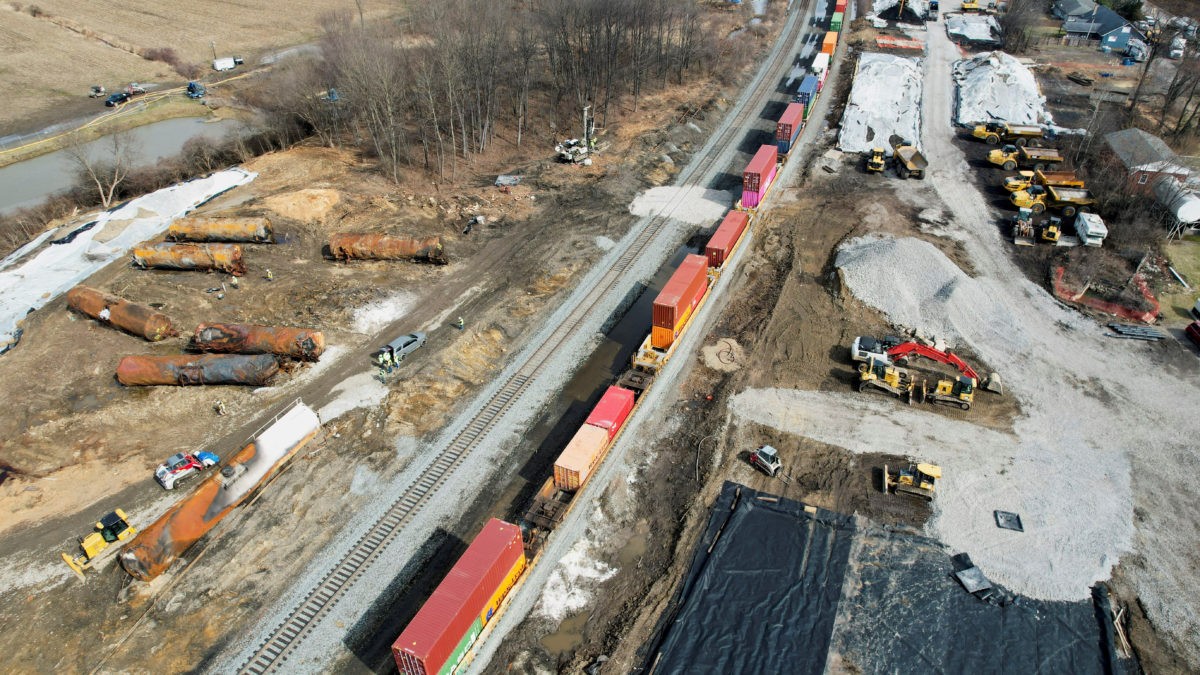
Lead photo of the East Palestine derailment/Alan Freed/Reuters
Next Lives Here
The University of Cincinnati is classified as a Research 1 institution by the Carnegie Commission and is ranked in the National Science Foundation's Top-35 public research universities. UC's graduate students and faculty investigate problems and innovate solutions with real-world impact. Next Lives Here.
Related Stories
Sugar overload killing hearts
November 10, 2025
Two in five people will be told they have diabetes during their lifetime. And people who have diabetes are twice as likely to develop heart disease. One of the deadliest dangers? Diabetic cardiomyopathy. But groundbreaking University of Cincinnati research hopes to stop and even reverse the damage before it’s too late.
Is going nuclear the solution to Ohio’s energy costs?
November 10, 2025

The Ohio Capital Journal recently reported that as energy prices continue to climb, economists are weighing the benefits of going nuclear to curb costs. The publication dove into a Scioto Analysis survey of 18 economists to weigh the pros and cons of nuclear energy. One economist featured was Iryna Topolyan, PhD, professor of economics at the Carl H. Lindner College of Business.
App turns smartwatch into detector of structural heart disease
November 10, 2025

An app that uses an AI model to read a single-lead ECG from a smartwatch can detect structural heart disease, researchers reported at the 2025 Scientific Sessions of the American Heart Association. Although the technology requires further validation, researchers said it could help improve the identification of patients with heart failure, valvular conditions and left ventricular hypertrophy before they become symptomatic, which could improve the prognosis for people with these conditions.