Fox19: Getting your sleep pattern back on track after daylight saving time
UC sleep medicine expert provides tips for getting your body acclimated to the time change

Daylight saving time ended this past week, as we turned the clocks back an hour. The time change each spring and fall can have implications on our health.
According to a 2020 study from the National Institute of Health, the annual beginning and ending of daylight saving time impacts a quarter of the world population and disturbs people's work and rest schedules and "possibly the body's biological clock."
In a story on the time change, Fox19 TV interviewed Ann Romaker, MD, of the Division of Pulmonary, Critical Care and Sleep Medicine in the UC College of Medicine, and the director of the UC Health Sleep Medicine Center.

Ann Romaker, MD, of the Division of Pulmonary, Critical Care and Sleep Medicine at the UC College of Medicine/Photo/Colleen Kelley/UC Marketing + Brand
"The best thing to do is to get sun exposure when we first get up, and for those of us who stay indoors, when we first get up, get light exposure and turn on all the lights in the room that we're in, so we have bright light for at least for first 30-60 minutes when we get up," Romaker said. "That signal of the light first thing in the morning is what tells us to be sleepy about 16 hours later and helps us get trained to the new clocks."
She suggested for people who have trouble making that adjustment, taking melatonin three to five hours before going to bed.
She said the time change can result in health problems for a lot of people.
"Heart and strokes both go up in the weeks after we make the change," Romaker said. "It's especially prominent in the spring but it happens after both changes as does an increase in accidents. People are driving at a different time, the sun is hitting at a different angle than they were used to. There's lots of things that we need to pay attention to."
Watch the entire interview here.
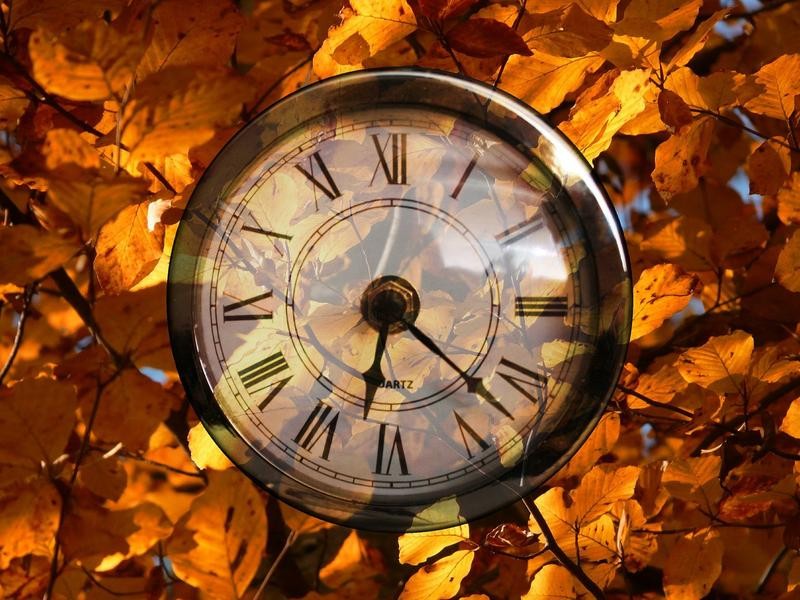
Lead image: Gerd Altmann/Pixabay
Related Stories
Sugar overload killing hearts
November 10, 2025
Two in five people will be told they have diabetes during their lifetime. And people who have diabetes are twice as likely to develop heart disease. One of the deadliest dangers? Diabetic cardiomyopathy. But groundbreaking University of Cincinnati research hopes to stop and even reverse the damage before it’s too late.
Is going nuclear the solution to Ohio’s energy costs?
November 10, 2025

The Ohio Capital Journal recently reported that as energy prices continue to climb, economists are weighing the benefits of going nuclear to curb costs. The publication dove into a Scioto Analysis survey of 18 economists to weigh the pros and cons of nuclear energy. One economist featured was Iryna Topolyan, PhD, professor of economics at the Carl H. Lindner College of Business.
App turns smartwatch into detector of structural heart disease
November 10, 2025

An app that uses an AI model to read a single-lead ECG from a smartwatch can detect structural heart disease, researchers reported at the 2025 Scientific Sessions of the American Heart Association. Although the technology requires further validation, researchers said it could help improve the identification of patients with heart failure, valvular conditions and left ventricular hypertrophy before they become symptomatic, which could improve the prognosis for people with these conditions.