Enquirer: Patient beat the odds of cancer with support from UC team

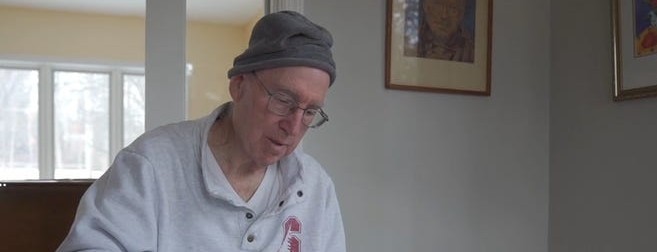
The Cincinnati Enquirer recently highlighted the story of Dr. Alan Jobe, a Cincinnati Children's and University of Cincinnati neonatologist and researcher who found his role reversed in 2019. Jobe, a former College of Medicine Daniel Drake medalist, became a patient after being diagnosed with a glioblastoma, one of the most deadly and aggressive forms of brain tumors.
"This is a tumor that if you read your survival curves for this, most people are dead in six months," Jobe told the Enquirer. "That was pretty depressing to hear."
The University of Cincinnati Brain Tumor Center team, including Mario Zuccarello, MD, and Soma Sengupta, MD, PhD, put together a treatment plan that included surgery, radiation and mild chemotherapy. Jobe has beaten the odds and hasn't had any tumor progression over the last two-and-a-half years.
Jobe has weakness on his left side, is unable to write and has difficulty chewing sometimes, but he spends his days gardening, swimming and traveling.
"You have to do what you can do when you can do it because you may not be able to do it later," he said.
Read the Enquirer story. (Note: Account log-in or subscription may be required to view story.)
Featured photo at top of Alan Jobe courtesy of UC Health.
Related Stories
Sugar overload killing hearts
November 10, 2025
Two in five people will be told they have diabetes during their lifetime. And people who have diabetes are twice as likely to develop heart disease. One of the deadliest dangers? Diabetic cardiomyopathy. But groundbreaking University of Cincinnati research hopes to stop and even reverse the damage before it’s too late.
Is going nuclear the solution to Ohio’s energy costs?
November 10, 2025

The Ohio Capital Journal recently reported that as energy prices continue to climb, economists are weighing the benefits of going nuclear to curb costs. The publication dove into a Scioto Analysis survey of 18 economists to weigh the pros and cons of nuclear energy. One economist featured was Iryna Topolyan, PhD, professor of economics at the Carl H. Lindner College of Business.
App turns smartwatch into detector of structural heart disease
November 10, 2025

An app that uses an AI model to read a single-lead ECG from a smartwatch can detect structural heart disease, researchers reported at the 2025 Scientific Sessions of the American Heart Association. Although the technology requires further validation, researchers said it could help improve the identification of patients with heart failure, valvular conditions and left ventricular hypertrophy before they become symptomatic, which could improve the prognosis for people with these conditions.