WVXU: Monarchs land on international endangered list
UC biologist Patrick Guerra explains how we can help monarchs survive epic migration

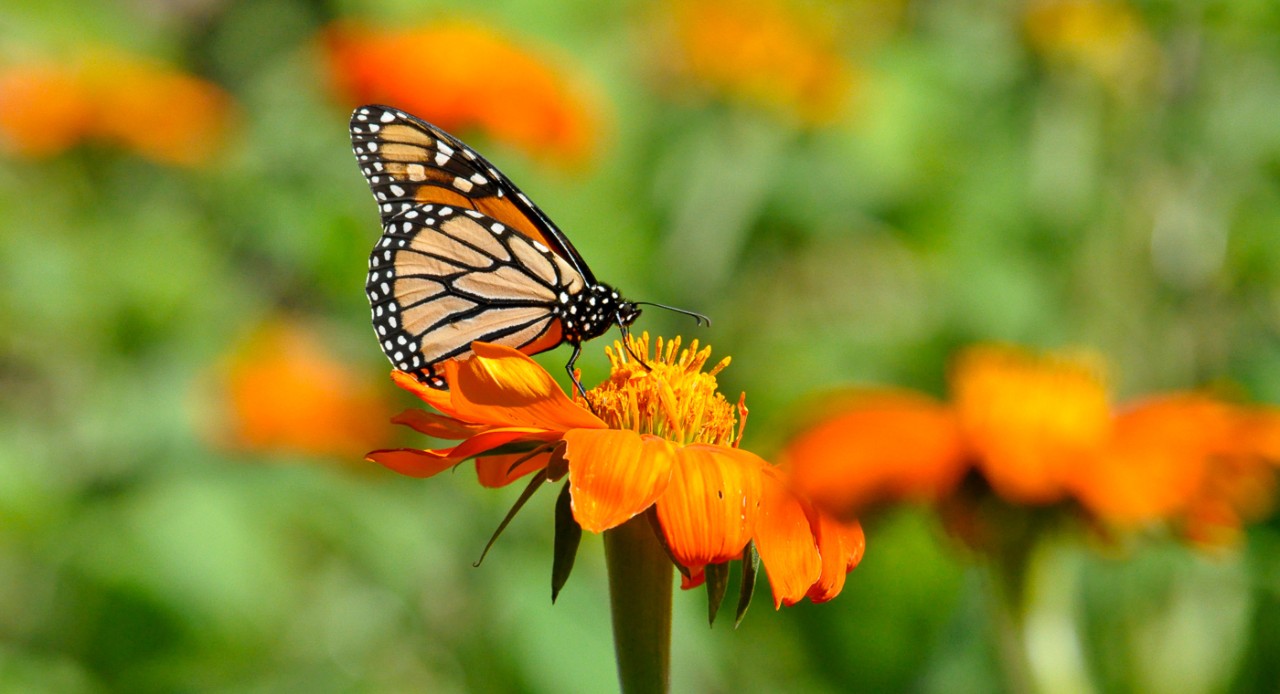
WVXU's Cincinnati Edition turned to a University of Cincinnati biologist to explain why monarch butterflies are in decline and what we can do to help.
The International Union for the Conservation of Nature last month placed monarch butterflies on its "red list" of endangered species, a warning that the species is in decline and at risk of extinction.
UC College of Arts and Sciences assistant professor Patrick Guerra told WVXU that the question of whether the species is in danger of extinction is complicated by the fact that they engage in a multi-generational migration. That makes a census somewhat trickier, he said.
"It really is a question of when you are looking at the population because there are different generations making this journey and what's the metric you use?" he said.

UC biologist Patrick Guerra works with monarch butterflies. Photo/Lisa Ventre/UC
Guerra was joined in the interview with Lily Maynard, the director of global conservation at the Cincinnati Zoo & Botanical Garden.
Guerra said monarchs are important pollinators for various species of flowering plant. But more than that, we can learn a lot from their incredible navigational abilities, he said.
A study this year by Guerra found that nighttime light pollution can interfere with their uncanny navigational abilities. Guerra found that butterflies roosting at night near artificial illumination such as a porch light can become disoriented the next day because the light interferes with their circadian rhythms. Artificial light can impede the molecular processes responsible for the butterfly’s remarkable navigational ability and trigger the butterfly to take wing when it should be resting.
The U.S. Fish and Wildlife Service in 2020 said the monarch butterfly warranted protection under the federal Endangered Species Act, but was precluded because of other species that had higher protection priorities.
"The IUCN red listing is a call to action," Guerra told Cincinnati Edition host Lucy May. "I think they will be placed on the Endangered Species List."
Guerra said people who want to help monarchs can plant milkweed around their homes and gardens and turn off outdoor lights where possible.

UC assistant professor Patrick Guerra and his students work with monarch butterflies at the Cincinnati Zoo & Botanical Garden. Photo/Lisa Ventre/UC
Related Stories
Sugar overload killing hearts
November 10, 2025
Two in five people will be told they have diabetes during their lifetime. And people who have diabetes are twice as likely to develop heart disease. One of the deadliest dangers? Diabetic cardiomyopathy. But groundbreaking University of Cincinnati research hopes to stop and even reverse the damage before it’s too late.
Is going nuclear the solution to Ohio’s energy costs?
November 10, 2025

The Ohio Capital Journal recently reported that as energy prices continue to climb, economists are weighing the benefits of going nuclear to curb costs. The publication dove into a Scioto Analysis survey of 18 economists to weigh the pros and cons of nuclear energy. One economist featured was Iryna Topolyan, PhD, professor of economics at the Carl H. Lindner College of Business.
App turns smartwatch into detector of structural heart disease
November 10, 2025

An app that uses an AI model to read a single-lead ECG from a smartwatch can detect structural heart disease, researchers reported at the 2025 Scientific Sessions of the American Heart Association. Although the technology requires further validation, researchers said it could help improve the identification of patients with heart failure, valvular conditions and left ventricular hypertrophy before they become symptomatic, which could improve the prognosis for people with these conditions.