TCTMD: Study finds drug provides no benefit during thrombectomy
UC expert comments on randomized trial results

New results from a randomized clinical trial found that administering a blood thinning drug before treatment for certain patients with strokes did not improve outcomes.
Researchers tested the effectiveness of the drug tirofiban given before endovascular thrombectomies, a minimally invasive procedure that uses a catheter to remove a blood clot from a blood vessel in the brain, for patients with acute ischemic strokes.
The findings of the study did not support the use of the drug before endovascular thrombectomy procedures.
Joseph Broderick, MD, professor in UC’s Department of Neurology and Rehabilitation Medicine in the College of Medicine, director of the UC Gardner Neuroscience Institute and a UC Health physician, was not involved in the study, but provided analysis to TCTMD.
Broderick said he agreed with the study's conclusions, but added there is still value in continuing research into additional therapies during thrombectomy procedures.
"The best use and which populations benefit the most is still an open question,” Broderick told TCTMD. “I think it’s still a fruitful ground for additional treatments, but it also points that maybe we should talk about standardizing or minimizing some of the things like heparin based upon the MR CLEAN-MED study that was reported earlier.”
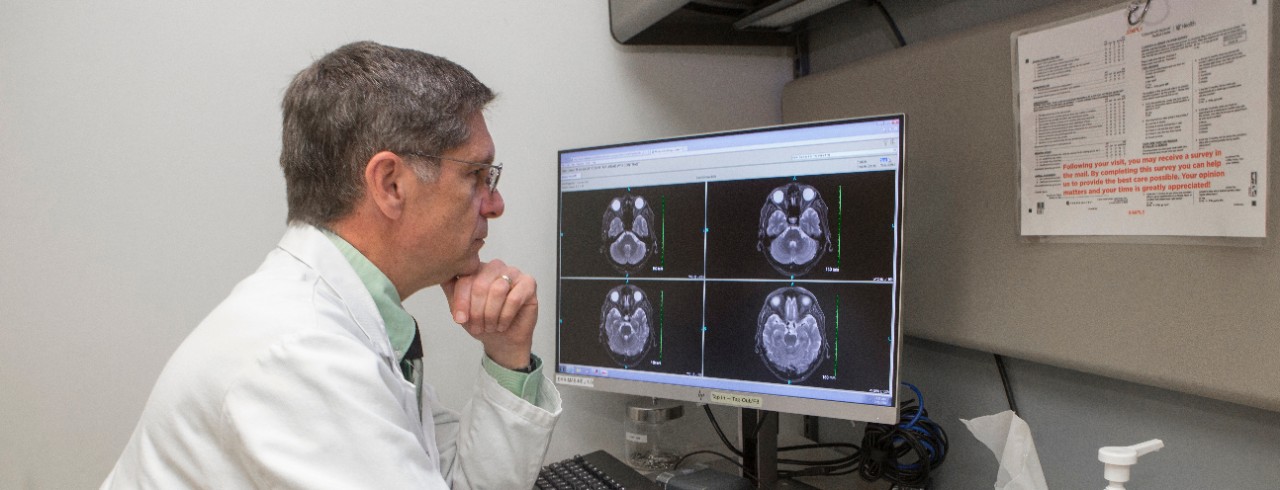
Featured photo at top of Dr. Broderick. Photo/Joseph Fuqua II/University of Cincinnati
Related Stories
Sugar overload killing hearts
November 10, 2025
Two in five people will be told they have diabetes during their lifetime. And people who have diabetes are twice as likely to develop heart disease. One of the deadliest dangers? Diabetic cardiomyopathy. But groundbreaking University of Cincinnati research hopes to stop and even reverse the damage before it’s too late.
Is going nuclear the solution to Ohio’s energy costs?
November 10, 2025

The Ohio Capital Journal recently reported that as energy prices continue to climb, economists are weighing the benefits of going nuclear to curb costs. The publication dove into a Scioto Analysis survey of 18 economists to weigh the pros and cons of nuclear energy. One economist featured was Iryna Topolyan, PhD, professor of economics at the Carl H. Lindner College of Business.
App turns smartwatch into detector of structural heart disease
November 10, 2025

An app that uses an AI model to read a single-lead ECG from a smartwatch can detect structural heart disease, researchers reported at the 2025 Scientific Sessions of the American Heart Association. Although the technology requires further validation, researchers said it could help improve the identification of patients with heart failure, valvular conditions and left ventricular hypertrophy before they become symptomatic, which could improve the prognosis for people with these conditions.