Radiology Business: In-house medical 3D print shops may save time, cut costs

New research shows surgeons and interventionalists who used 3D printing services from the University of Cincinnati's Department of Radiology to plan and practice upcoming procedures saved almost half an hour per operation over the course of a year.
The results of the study were published online Aug. 18 in the Journal of the American College of Radiology.
Led by Prashanth Ravi, PhD, research associate in the Department of Radiology, and Frank J. Rybicki, MD, professor and vice chair of quality and safety in the Department of Radiology, the researchers estimated the in-house 3D print shop saved almost $3,000 per patient in operating room costs due to shortened procedure times. The models themselves were also cheaper, around $2,200, compared to a price of approximately $2,500 if printed by an outside vendor.
"Utility and cost benchmarks for anatomic models 3-D printed in a hospital can inform health care budgets," the study authors wrote. "Realizing pecuniary benefit from the procedure time saved requires future research."
The study was recently highlighted by Radiology Business and AuntMinnie.com.
Read the Radiology Business article.
Read the AuntMinnie.com article.
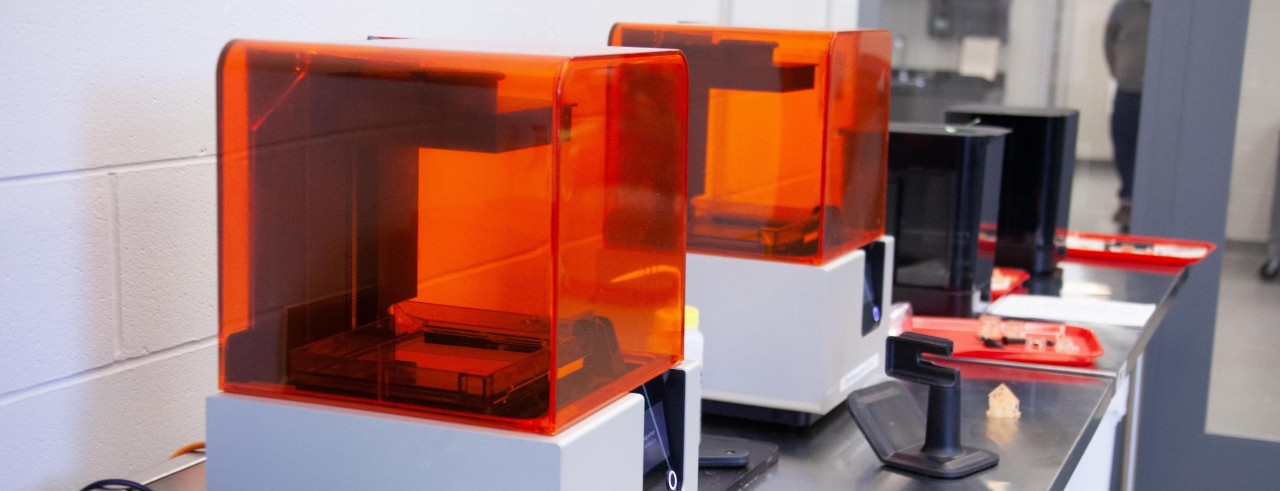
Featured photo at top of 3D printers. Photo/Ravenna Rutledge/UC Marketing + Brand.
Related Stories
Sugar overload killing hearts
November 10, 2025
Two in five people will be told they have diabetes during their lifetime. And people who have diabetes are twice as likely to develop heart disease. One of the deadliest dangers? Diabetic cardiomyopathy. But groundbreaking University of Cincinnati research hopes to stop and even reverse the damage before it’s too late.
Is going nuclear the solution to Ohio’s energy costs?
November 10, 2025

The Ohio Capital Journal recently reported that as energy prices continue to climb, economists are weighing the benefits of going nuclear to curb costs. The publication dove into a Scioto Analysis survey of 18 economists to weigh the pros and cons of nuclear energy. One economist featured was Iryna Topolyan, PhD, professor of economics at the Carl H. Lindner College of Business.
App turns smartwatch into detector of structural heart disease
November 10, 2025

An app that uses an AI model to read a single-lead ECG from a smartwatch can detect structural heart disease, researchers reported at the 2025 Scientific Sessions of the American Heart Association. Although the technology requires further validation, researchers said it could help improve the identification of patients with heart failure, valvular conditions and left ventricular hypertrophy before they become symptomatic, which could improve the prognosis for people with these conditions.