Discover: How ancient Maya practiced sustainable agriculture
Magazine highlights UC's new discoveries about ancient Maya

Discover Magazine highlighted work by the University of Cincinnati that suggests the ancient Maya practiced sustainable forestry and agriculture.
UC researchers used genetic and pollen analyses to provide the most detailed examination to date of the wild and cultivated plants found in the ancient Maya city Yaxnohcah, which was occupied between 1,800 and 3,000 years ago in what is now Mexico’s Yucatan Peninsula.
UC College of Arts and Sciences paleo-ecologist David Lentz told Discover Magazine that the ancient Maya managed their crops and forests in a way that showed consideration for the future.
“Everything the Maya used is still there, and still there in abundance,” Lentz told Discover.
A multidisciplinary team of biologists, anthropologists, geneticists and geographers collected and analyzed 38 soil samples, finding evidence of wild trees and plants growing near the city. The research suggests the ancient Maya left much of the rainforest intact.
The study was published in the journal Frontiers in Ecology and Evolution.

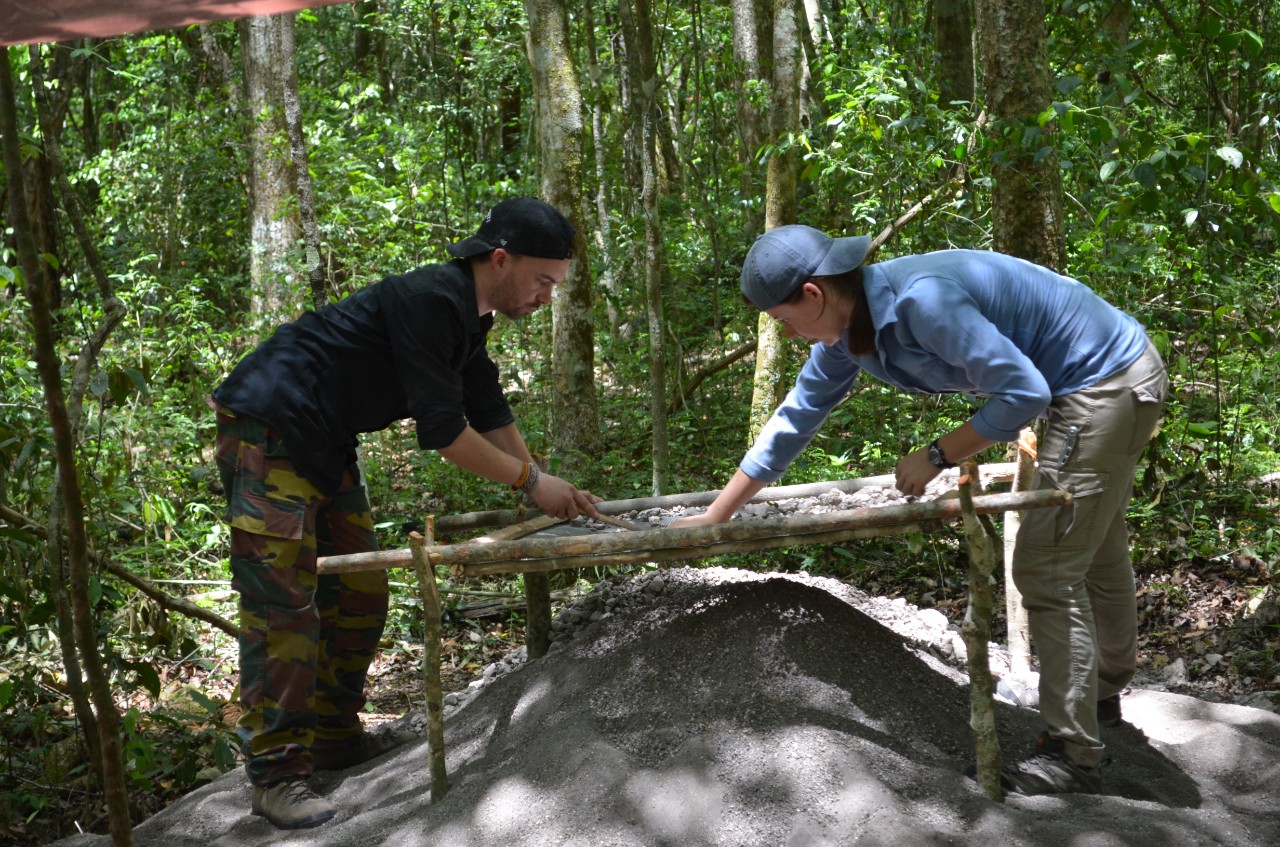
UC professors David Lentz and Nicholas Dunning work at an ancient Maya site at Yaxnohcah. Photo/Provided
Related Stories
Sugar overload killing hearts
November 10, 2025
Two in five people will be told they have diabetes during their lifetime. And people who have diabetes are twice as likely to develop heart disease. One of the deadliest dangers? Diabetic cardiomyopathy. But groundbreaking University of Cincinnati research hopes to stop and even reverse the damage before it’s too late.
Is going nuclear the solution to Ohio’s energy costs?
November 10, 2025

The Ohio Capital Journal recently reported that as energy prices continue to climb, economists are weighing the benefits of going nuclear to curb costs. The publication dove into a Scioto Analysis survey of 18 economists to weigh the pros and cons of nuclear energy. One economist featured was Iryna Topolyan, PhD, professor of economics at the Carl H. Lindner College of Business.
App turns smartwatch into detector of structural heart disease
November 10, 2025

An app that uses an AI model to read a single-lead ECG from a smartwatch can detect structural heart disease, researchers reported at the 2025 Scientific Sessions of the American Heart Association. Although the technology requires further validation, researchers said it could help improve the identification of patients with heart failure, valvular conditions and left ventricular hypertrophy before they become symptomatic, which could improve the prognosis for people with these conditions.