Local media highlight Stroke Awareness Month
UC experts detail warning signs, risk factors and prevention

According to the Centers for Disease Control and Prevention, someone in the United States has a stroke every 40 seconds. Every three-and-a-half minutes, someone in the U.S. dies of stroke.
May is National Stroke Awareness Month, highlighting the importance of knowing risk factors, symptoms and avenues for prevention. The University of Cincinnati's Pooja Khatri, MD, joined WCPO's Cincy Lifestyle program and Eva Mistry, MD, was a guest on the Fox 19 morning show to discuss National Stroke Awareness Month.
"One important thing to remember about [stroke], is it’s like lightning," said Mistry, assistant clinical professor in the Department of Neurology and Rehabilitation Medicine in UC's College of Medicine and a UC Health physician. "It happens very suddenly."
Because of the quick onset, it is important to know the FAST mnemonic device that details the most common signs of stroke and how to respond:
- F: Facial drooping
- A: Arm or leg drop, or weakness in the arm or leg
- S: Speech issues, such as slurred speech or an inability to get your words out
- T: Time is of the essence; call 911 immediately
"Don’t be shy. This is not the time to mess around," said Khatri, professor of neurology and director of the vascular neurology division in the UC College of Medicine’s Department of Neurology and Rehabilitation Medicine; co-director of the UC Gardner Neuroscience Institute Stroke Center of Excellence and the NIH StrokeNet National Coordinating Center housed at UC; as well as a UC Health physician. "We’ll gladly take a mistake. And if you call 911, you’ll be brought to the nearest hospital and you’ll actually get the same stroke team region-wide, which is something we’re really proud of."
Mistry and Khatri noted high blood pressure is the No. 1 risk factor for stroke, with other risk factors including tobacco use and high cholesterol. Strokes tend to occur in people who are older and overweight, but Khatri stressed that strokes can still occur in young and otherwise healthy people.
Watch Dr. Khatri's segment on Cincy Lifestyle.
Watch Dr. Mistry's segment on Fox 19.
Learn more about stroke symptoms, risk factors and prevention from the American Heart Association.
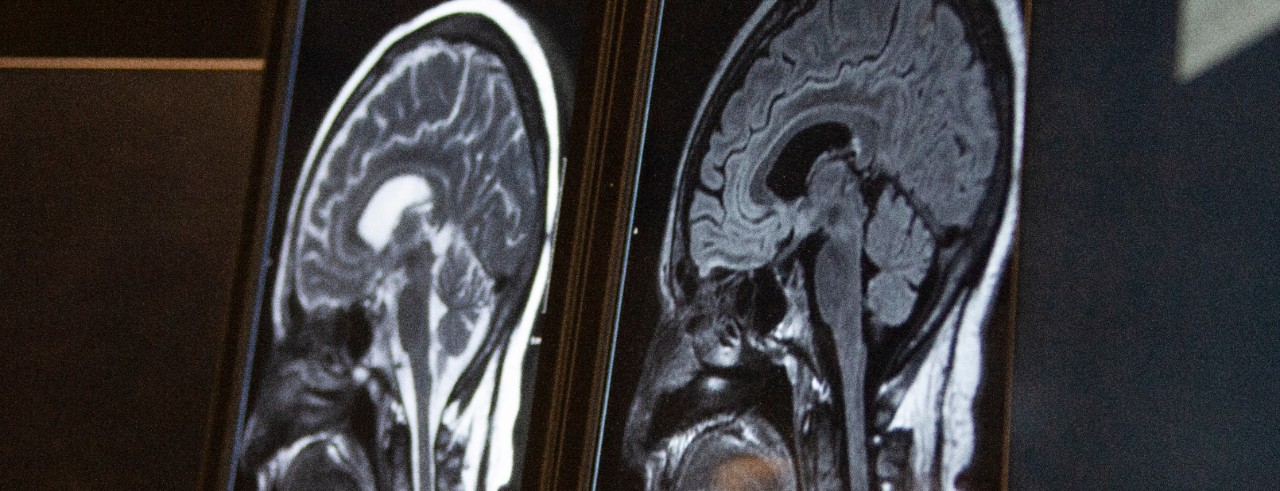
Featured photo at top of MRI brain scan. Photo/Ravenna Rutledge/University of Cincinnati.
Related Stories
Sugar overload killing hearts
November 10, 2025
Two in five people will be told they have diabetes during their lifetime. And people who have diabetes are twice as likely to develop heart disease. One of the deadliest dangers? Diabetic cardiomyopathy. But groundbreaking University of Cincinnati research hopes to stop and even reverse the damage before it’s too late.
Is going nuclear the solution to Ohio’s energy costs?
November 10, 2025

The Ohio Capital Journal recently reported that as energy prices continue to climb, economists are weighing the benefits of going nuclear to curb costs. The publication dove into a Scioto Analysis survey of 18 economists to weigh the pros and cons of nuclear energy. One economist featured was Iryna Topolyan, PhD, professor of economics at the Carl H. Lindner College of Business.
App turns smartwatch into detector of structural heart disease
November 10, 2025

An app that uses an AI model to read a single-lead ECG from a smartwatch can detect structural heart disease, researchers reported at the 2025 Scientific Sessions of the American Heart Association. Although the technology requires further validation, researchers said it could help improve the identification of patients with heart failure, valvular conditions and left ventricular hypertrophy before they become symptomatic, which could improve the prognosis for people with these conditions.