WLWT: Beautiful tree in Ohio causes ugly problem
UC biologist explains the significance of invasive pear trees

WLWT spoke to a University of Cincinnati biologist about why a ubiquitous flowering tree in the Midwest is creating an environmental problem.
Bradford pear trees were introduced from China. Initially, the imported varieties were sterile. But since they also were fragile, with trunks that easily split as they grew, nurseries crossed them with similar hardy trees that could reproduce.
And reproduce they have. Wild pear trees have cropped up along highways and in forest clearings far where birds deposit their seeds, said Theresa Culley, head of UC's Department of Biological Sciences.
"That's one of the really interesting things about invasive species. There's always a story behind it," Culley told WLWT.
Today, the white blossoms of Callery pear trees are easy to spot each spring across Cincinnati.
The invasive pear trees are crowding out native species that provide more food and habitat for wildlife.
Ohio plans to ban the sale and distribution of Callery pear trees starting next year with a five-year grandfather clause to allow garden stores to sell their remaining inventory.
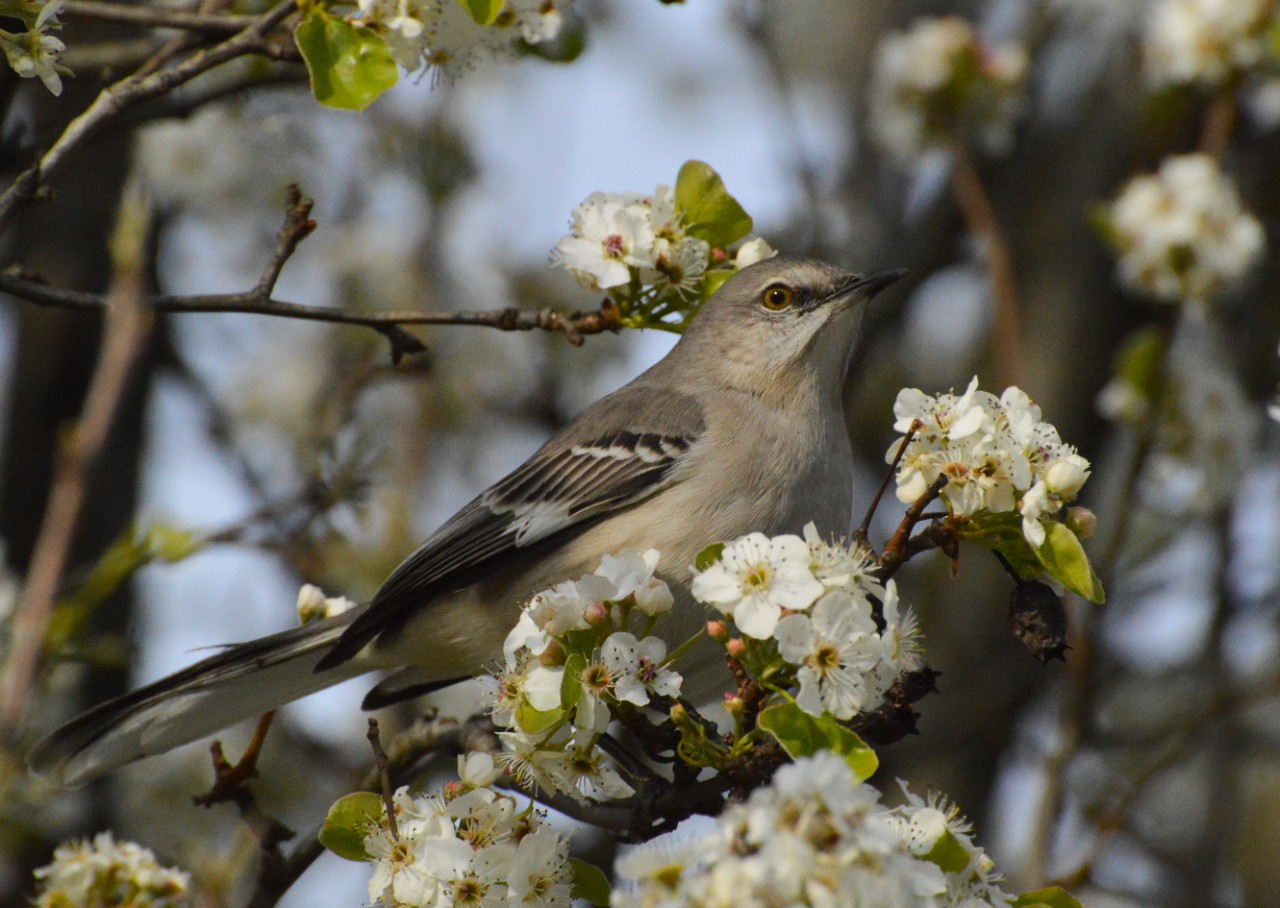
Featured image at top: A northern mockingbird is surrounded by the white flowers of a Callery pear tree. Photo/Michael Miller

UC biologist Theresa Culley stands in a grove of wild Callery pear trees at the Harris M. Benedict Nature Preserve. The fast-growing trees are crowding out native forests in some parts of the Midwest. Photo/Joseph Fuqua II/UC Creative + Brand
Related Stories
Sugar overload killing hearts
November 10, 2025
Two in five people will be told they have diabetes during their lifetime. And people who have diabetes are twice as likely to develop heart disease. One of the deadliest dangers? Diabetic cardiomyopathy. But groundbreaking University of Cincinnati research hopes to stop and even reverse the damage before it’s too late.
Is going nuclear the solution to Ohio’s energy costs?
November 10, 2025

The Ohio Capital Journal recently reported that as energy prices continue to climb, economists are weighing the benefits of going nuclear to curb costs. The publication dove into a Scioto Analysis survey of 18 economists to weigh the pros and cons of nuclear energy. One economist featured was Iryna Topolyan, PhD, professor of economics at the Carl H. Lindner College of Business.
App turns smartwatch into detector of structural heart disease
November 10, 2025

An app that uses an AI model to read a single-lead ECG from a smartwatch can detect structural heart disease, researchers reported at the 2025 Scientific Sessions of the American Heart Association. Although the technology requires further validation, researchers said it could help improve the identification of patients with heart failure, valvular conditions and left ventricular hypertrophy before they become symptomatic, which could improve the prognosis for people with these conditions.