NYT: Methane leaks from wells far exceed current estimates
The study supports similar findings by UC about leaky wells in the Permian basin

The New York Times turned to University of Cincinnati associate professor Amy Townsend-Small to explain the significance of a new study that found far higher amounts of methane leaking from oil and gas wells and pipelines in New Mexico than was previously believed.
Stanford University examined 27,000 sites or about 90% of all wells in New Mexico and concluded that 194 metric tons per hour of methane, a potent greenhouse gas that contributes to climate change, were released into the atmosphere. This is more than six times what federal regulators estimated.
“If this result is similar in other basins — which we don’t know if it is — that would eliminate the greenhouse gas emission savings of the coal-to-gas transition,” Townsend-Small told the New York Times.
While she was not part of the Stanford study, a similar study by Townsend-Small and her students, published last year in the journal Environmental Research Letters, found that uncapped, idle oil wells could be leaking millions of kilograms of methane into the atmosphere and surface water each year. It was the first of its kind examination of methane emissions from inactive oil wells in Texas.
In 2016, Townsend-Small and her research partners examined methane leaks in 138 abandoned oil and gas wells and found that nearly 7% had measurable leaks.
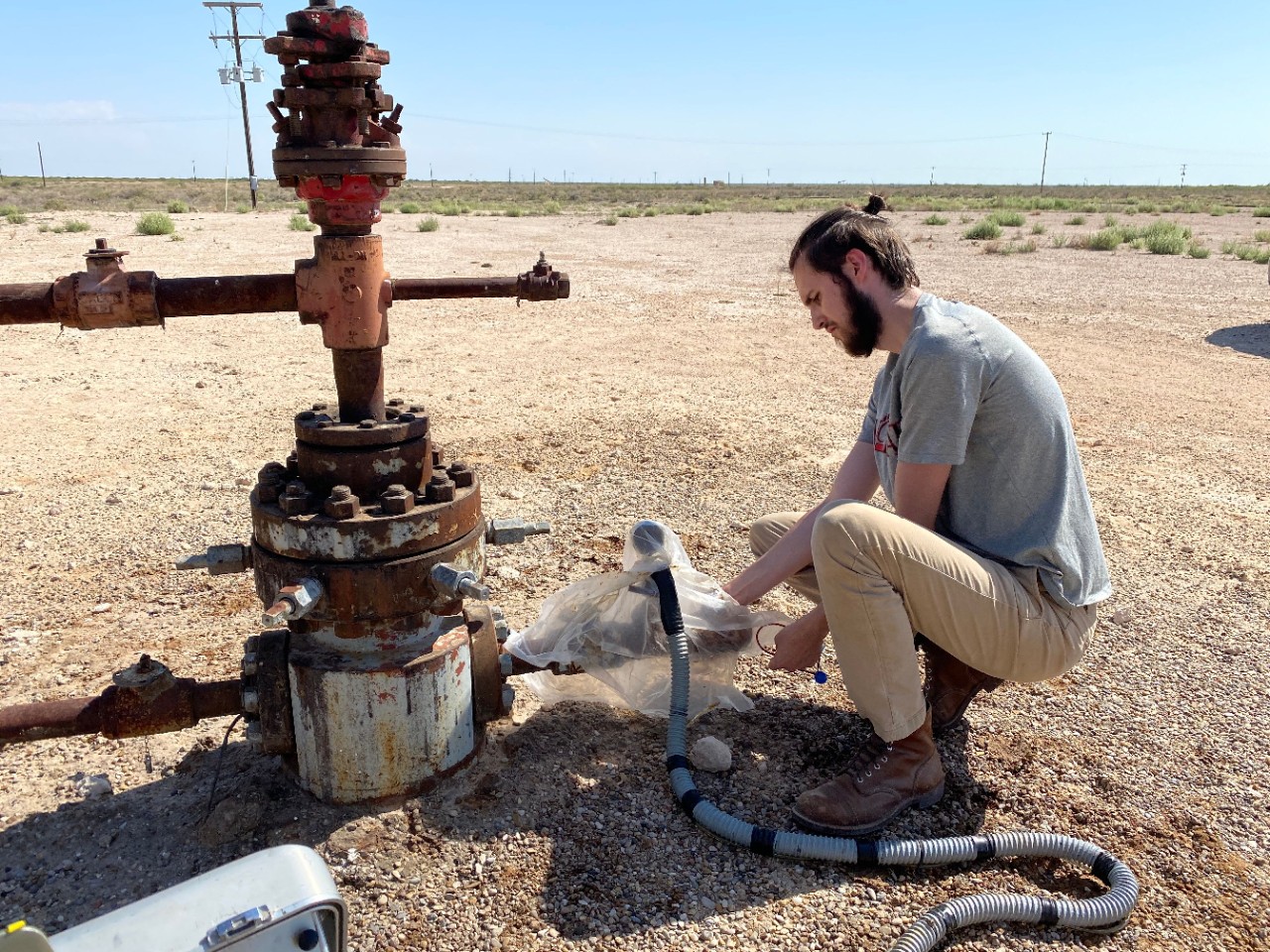
Featured image at top: UC College of Arts and Sciences graduate Jacob Hoschouer takes samples at the site of an oil well in Texas. Photo/Provided
Related Stories
Sugar overload killing hearts
November 10, 2025
Two in five people will be told they have diabetes during their lifetime. And people who have diabetes are twice as likely to develop heart disease. One of the deadliest dangers? Diabetic cardiomyopathy. But groundbreaking University of Cincinnati research hopes to stop and even reverse the damage before it’s too late.
Is going nuclear the solution to Ohio’s energy costs?
November 10, 2025

The Ohio Capital Journal recently reported that as energy prices continue to climb, economists are weighing the benefits of going nuclear to curb costs. The publication dove into a Scioto Analysis survey of 18 economists to weigh the pros and cons of nuclear energy. One economist featured was Iryna Topolyan, PhD, professor of economics at the Carl H. Lindner College of Business.
App turns smartwatch into detector of structural heart disease
November 10, 2025

An app that uses an AI model to read a single-lead ECG from a smartwatch can detect structural heart disease, researchers reported at the 2025 Scientific Sessions of the American Heart Association. Although the technology requires further validation, researchers said it could help improve the identification of patients with heart failure, valvular conditions and left ventricular hypertrophy before they become symptomatic, which could improve the prognosis for people with these conditions.