Cincinnati.com: Demand for nurses outstrips supply. So why can't Cincinnati area nursing schools keep up?
UC College of Nursing interim dean says a nursing shortage means a faculty shortage

A variety of factors are contributing to a nationwide shortage of nurses. Those factors include burnout spurred by the pandemic and a large wave of retirements due to the aging of Baby Boomers.
Cincinnati.com reported that to help fill the gaps, employers are turning to nursing programs to churn out more graduates, but there's a problem: nursing shortages mean nursing teacher shortages, too, and some programs just don't have the capacity to bring in more students.
Denise Gormley, PhD, interim dean of the UC College of Nursing was one of those interviewed for the story.

Denise Gormley, PhD, interim dean of the UC College of Nursing/Photo/Colleen Kelley/UC Creative + Brand
"We're seeing more and more retirements," Gormley said. "It is an issue and I think it very well could get worse. If we've got a nursing shortage, then we're going to have a faculty shortage. Because our faculty have to be nurses."
At UC, Gormley said nursing is the most popular major among undergraduate applicants. The program is expanding to hopefully offer 180 direct admissions in fall of 2022, compared to the typical 150 freshmen admitted to the nursing major each year – "which we hope will help with the (nursing) shortage, over time, at least locally and regionally," Gormley said. The university had been planning to expand for years before COVID-19 exacerbated the nursing shortage.
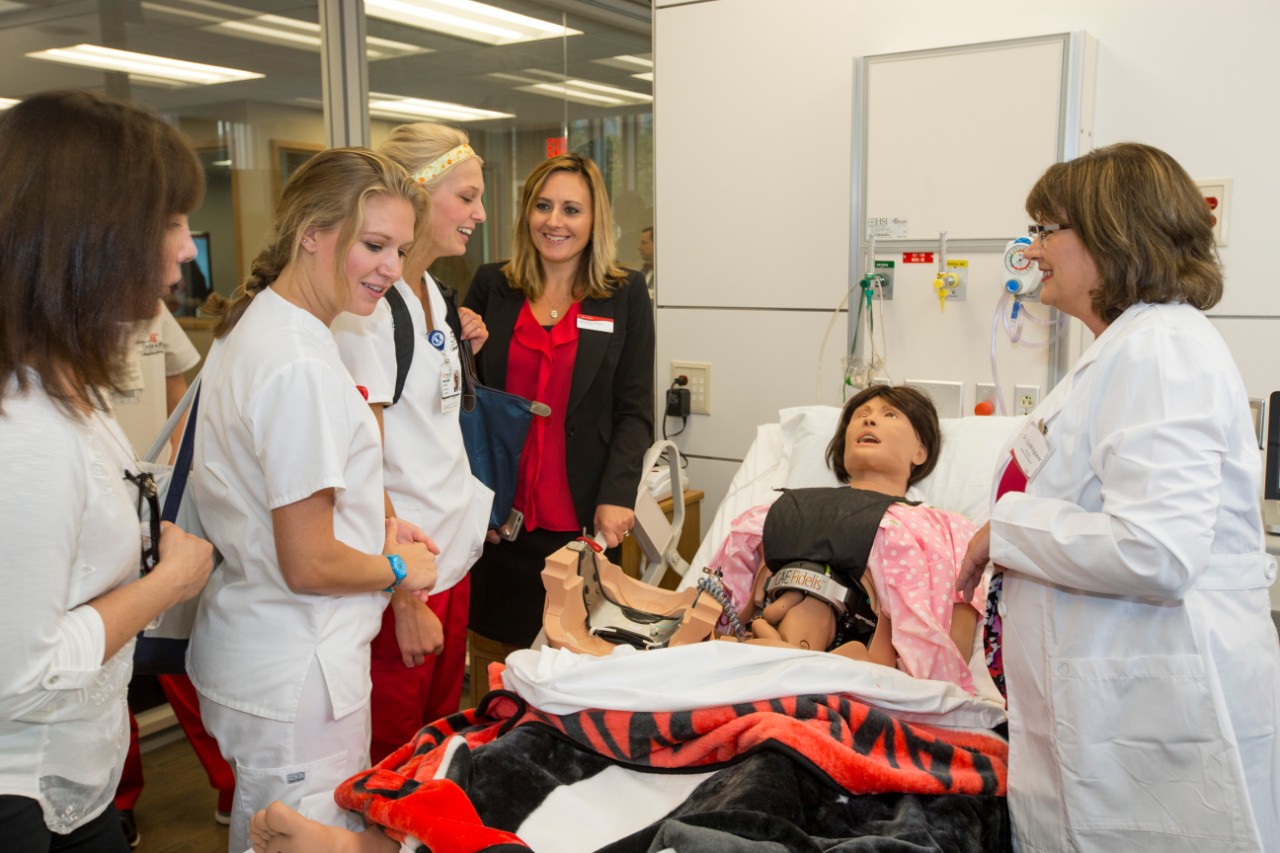
Lead photo of UC College of Nursing students and instructor/Colleen Kelley/UC Creative + Brand
Next Lives Here
The University of Cincinnati is classified as a Research 1 institution by the Carnegie Commission and is ranked in the National Science Foundation's Top-35 public research universities. UC's medical, graduate and undergraduate students and faculty investigate problems and innovate solutions with real-world impact. Next Lives Here.
Related Stories
Sugar overload killing hearts
November 10, 2025
Two in five people will be told they have diabetes during their lifetime. And people who have diabetes are twice as likely to develop heart disease. One of the deadliest dangers? Diabetic cardiomyopathy. But groundbreaking University of Cincinnati research hopes to stop and even reverse the damage before it’s too late.
Is going nuclear the solution to Ohio’s energy costs?
November 10, 2025

The Ohio Capital Journal recently reported that as energy prices continue to climb, economists are weighing the benefits of going nuclear to curb costs. The publication dove into a Scioto Analysis survey of 18 economists to weigh the pros and cons of nuclear energy. One economist featured was Iryna Topolyan, PhD, professor of economics at the Carl H. Lindner College of Business.
App turns smartwatch into detector of structural heart disease
November 10, 2025

An app that uses an AI model to read a single-lead ECG from a smartwatch can detect structural heart disease, researchers reported at the 2025 Scientific Sessions of the American Heart Association. Although the technology requires further validation, researchers said it could help improve the identification of patients with heart failure, valvular conditions and left ventricular hypertrophy before they become symptomatic, which could improve the prognosis for people with these conditions.