55KRC: Grants aid UC research of pediatric brain tumors

Diffuse midline gliomas, formerly referred to as Diffuse Intrinsic Pontine Gliomas (DIPG), are deadly brain tumors. Each year, approximately 200-300 children in the United States are diagnosed with this tumor that is commonly located in the brain stem.
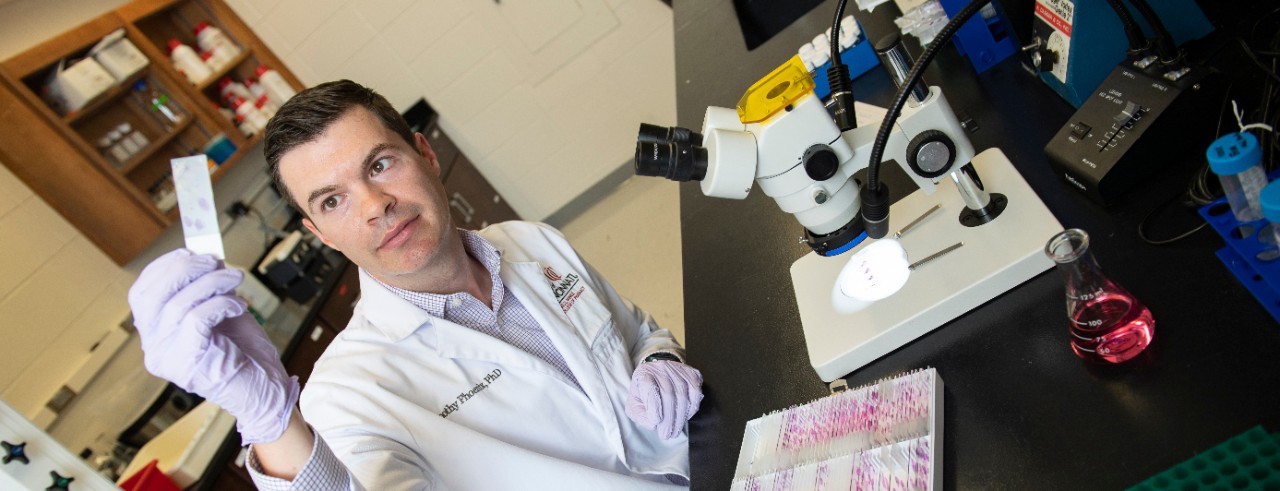
Timothy Phoenix, PhD, assistant professor in the University of Cincinnati's James L. Winkle College of Pharmacy Division of Pharmaceutical Sciences and a UC Cancer Center member, has recently received three separate grants studying how certain genetic factors affect the tumor's growth.
"We’ve learned a lot about what’s going wrong with these tumors in terms of genetic mutations," Phoenix told 55KRC's Simply Medicine program. "As we figure out what’s altered in these tumors, we can figure out drugs that might target these specific mutations."
Listen to the Simply Medicine segment. (Note: Segment begins around 12:30 mark.)
Read more about Phoenix's research.
Featured photo at top of Dr. Phoenix: Photo/Colleen Kelley/UC Creative + Brand
Related Stories
Sugar overload killing hearts
November 10, 2025
Two in five people will be told they have diabetes during their lifetime. And people who have diabetes are twice as likely to develop heart disease. One of the deadliest dangers? Diabetic cardiomyopathy. But groundbreaking University of Cincinnati research hopes to stop and even reverse the damage before it’s too late.
Is going nuclear the solution to Ohio’s energy costs?
November 10, 2025

The Ohio Capital Journal recently reported that as energy prices continue to climb, economists are weighing the benefits of going nuclear to curb costs. The publication dove into a Scioto Analysis survey of 18 economists to weigh the pros and cons of nuclear energy. One economist featured was Iryna Topolyan, PhD, professor of economics at the Carl H. Lindner College of Business.
App turns smartwatch into detector of structural heart disease
November 10, 2025

An app that uses an AI model to read a single-lead ECG from a smartwatch can detect structural heart disease, researchers reported at the 2025 Scientific Sessions of the American Heart Association. Although the technology requires further validation, researchers said it could help improve the identification of patients with heart failure, valvular conditions and left ventricular hypertrophy before they become symptomatic, which could improve the prognosis for people with these conditions.