WVXU: Research aims to change effects of PTSD on brain
UC expert details cutting edge treatments at Cincinnati VA

The U.S. Department of Veterans Affairs estimates that diagnoses of post-traumatic stress disorder (PTSD) in veterans is roughly double that of the general American population.
Kate Chard, PhD, University of Cincinnati professor of psychiatry and behavioral neuroscience and director of PTSD programs at the Cincinnati VA, is conducting cutting edge research and developing new evidence-based treatments for veterans with PTSD.
"What's different about the military is we have people in the military who have the same childhood traumas as the rest of us — maybe car accidents, natural disasters — but they also can have traumas related to combat," Chard told WVXU.
Chard is leading a study analyzing blood, saliva and EEG brainwaves to find biological differences in veterans with PTSD. The Cincinnati VA also offers three main kinds of treatment: cognitive processing therapy, prolonged exposure and EMDR.
"I think the thing that makes Cincinnati really stand out is we never stop. If one treatment doesn't work for you, then let's try something else," Chard said. "We're always going to be there for you to help you address your PTSD."
Read or listen to the WVXU story.
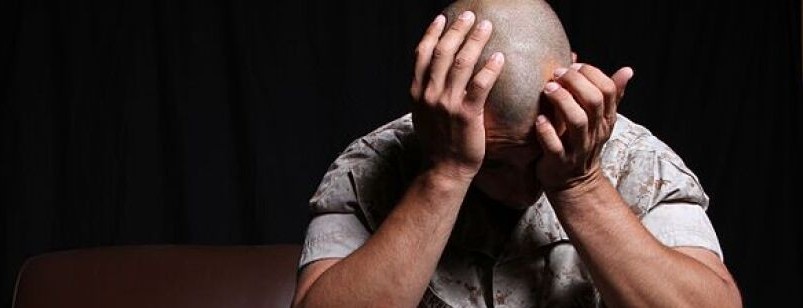
Featured photo at top courtesy of the United States Marine Corps.
Related Stories
Sugar overload killing hearts
November 10, 2025
Two in five people will be told they have diabetes during their lifetime. And people who have diabetes are twice as likely to develop heart disease. One of the deadliest dangers? Diabetic cardiomyopathy. But groundbreaking University of Cincinnati research hopes to stop and even reverse the damage before it’s too late.
Is going nuclear the solution to Ohio’s energy costs?
November 10, 2025

The Ohio Capital Journal recently reported that as energy prices continue to climb, economists are weighing the benefits of going nuclear to curb costs. The publication dove into a Scioto Analysis survey of 18 economists to weigh the pros and cons of nuclear energy. One economist featured was Iryna Topolyan, PhD, professor of economics at the Carl H. Lindner College of Business.
App turns smartwatch into detector of structural heart disease
November 10, 2025

An app that uses an AI model to read a single-lead ECG from a smartwatch can detect structural heart disease, researchers reported at the 2025 Scientific Sessions of the American Heart Association. Although the technology requires further validation, researchers said it could help improve the identification of patients with heart failure, valvular conditions and left ventricular hypertrophy before they become symptomatic, which could improve the prognosis for people with these conditions.