Discover Magazine: Why bacteria are the new disease fighters

Bacteria are often thought of as the "bad guys" when it comes to our health, but many good bacteria are useful and needed to perform certain functions.
Researchers at the University of Cincinnati have developed a probiotic bacteria that helps to break down cancer cell's defenses, making other treatments more effective.
Nalinikanth Kotagiri, PhD, an assistant professor in UC’s James L. Winkle College of Pharmacy and a UC Cancer Center member, told Discover Magazine that engineered bacteria help to reshape the body's immune system, enabling it to better fight diseases like cancer.
“Unlike antibody-based drugs that we take only once we have a diagnosis, these engineered bacteria can be integrated into the microbiome that’s already there,” Kotagiri said.
Read the Discover Magazine story. (Note: A web login or subscription may be needed to access the article.)
Read more about Kotagiri's research.
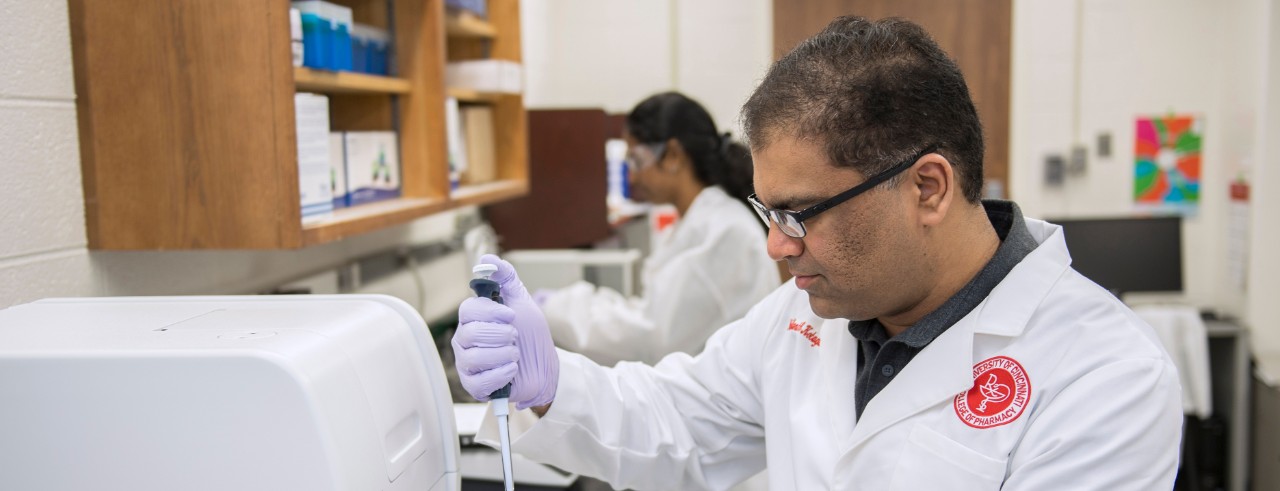
Featured photo at top of Dr. Kotagiri working in his lab. Photo/Colleen Kelley/University of Cincinnati.
Related Stories
Sugar overload killing hearts
November 10, 2025
Two in five people will be told they have diabetes during their lifetime. And people who have diabetes are twice as likely to develop heart disease. One of the deadliest dangers? Diabetic cardiomyopathy. But groundbreaking University of Cincinnati research hopes to stop and even reverse the damage before it’s too late.
Is going nuclear the solution to Ohio’s energy costs?
November 10, 2025

The Ohio Capital Journal recently reported that as energy prices continue to climb, economists are weighing the benefits of going nuclear to curb costs. The publication dove into a Scioto Analysis survey of 18 economists to weigh the pros and cons of nuclear energy. One economist featured was Iryna Topolyan, PhD, professor of economics at the Carl H. Lindner College of Business.
App turns smartwatch into detector of structural heart disease
November 10, 2025

An app that uses an AI model to read a single-lead ECG from a smartwatch can detect structural heart disease, researchers reported at the 2025 Scientific Sessions of the American Heart Association. Although the technology requires further validation, researchers said it could help improve the identification of patients with heart failure, valvular conditions and left ventricular hypertrophy before they become symptomatic, which could improve the prognosis for people with these conditions.