Economic Times: Poorly fitted face masks can double infection risk
UC researchers say good fit makes all the difference in mask's protection from COVID-19

Economic Times reported on research at the University of Cincinnati that found poor-fitting face masks can double the risk of infection from airborne diseases such as COVID-19.
UC College of Engineering and Applied Science professor Rupak Banerjee and his co-authors used computerized tomography scans of three sizes of N95 face masks to identify gaps in the wear on three different sizes of mannequin heads.
They found that poorly fitting masks can have substantial leaks around the face that reduce their effectiveness and increase the risk of infection.
Their study was published in the journal Scientific Reports.
“Many people do not realize that the fit of face masks can vary. There are different face shapes and different sizes of masks,” Banerjee said.
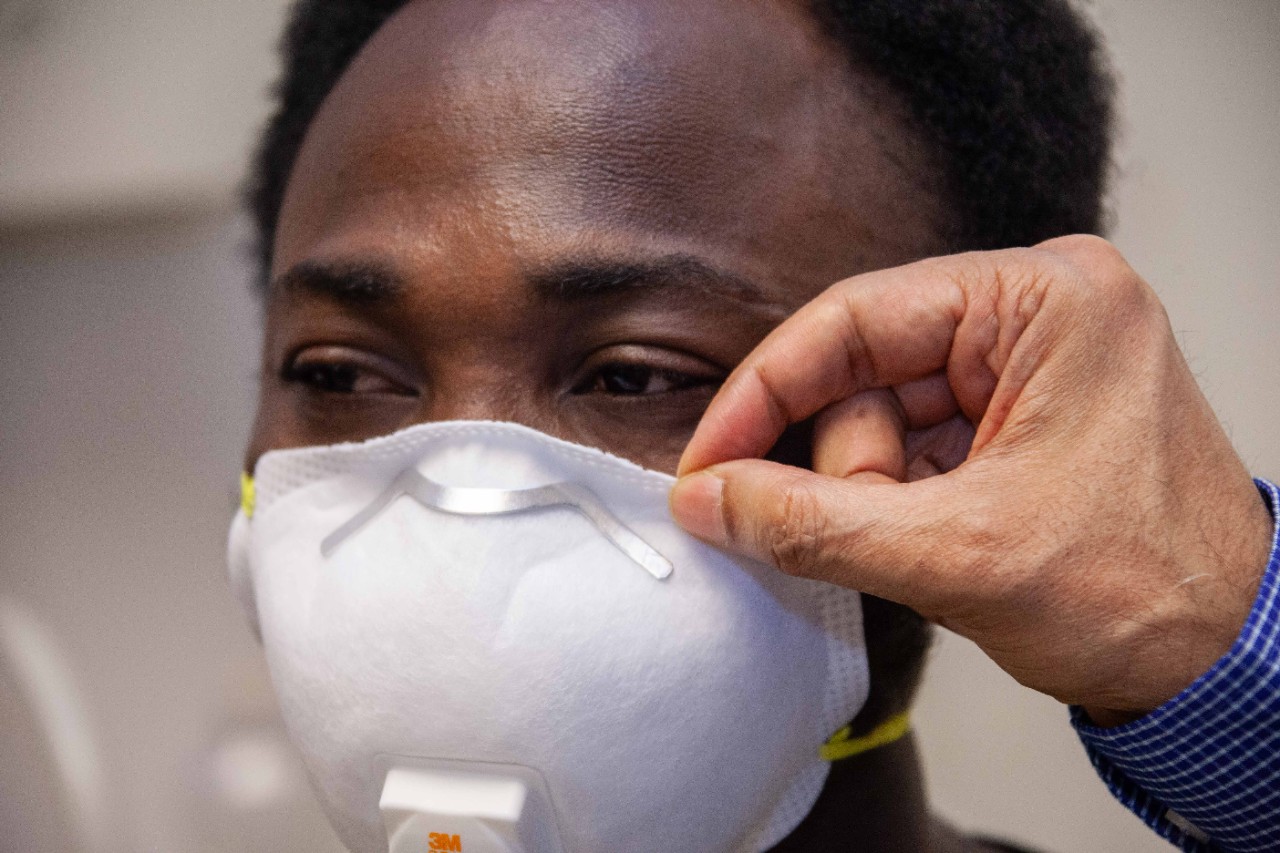
Featured image at top: UC graduate student Israel Ajiboye wears an N95 face mask. Photo/Ravenna Rutledge/UC Creative + Brand

UC College of Engineering and Applied Science professor Rupak Banerjee adjusts a face mask on volunteer and UC graduate student Israel Ajiboye while grad student Shreyash Manegaonkar looks on during a demonstration in Banerjee's lab. Researchers found that a face mask's fit makes all the difference in protecting the wearer and others from infectious disease. Photo/Ravenna Rutledge/UC Creative + Brand
Related Stories
Sugar overload killing hearts
November 10, 2025
Two in five people will be told they have diabetes during their lifetime. And people who have diabetes are twice as likely to develop heart disease. One of the deadliest dangers? Diabetic cardiomyopathy. But groundbreaking University of Cincinnati research hopes to stop and even reverse the damage before it’s too late.
Is going nuclear the solution to Ohio’s energy costs?
November 10, 2025

The Ohio Capital Journal recently reported that as energy prices continue to climb, economists are weighing the benefits of going nuclear to curb costs. The publication dove into a Scioto Analysis survey of 18 economists to weigh the pros and cons of nuclear energy. One economist featured was Iryna Topolyan, PhD, professor of economics at the Carl H. Lindner College of Business.
App turns smartwatch into detector of structural heart disease
November 10, 2025

An app that uses an AI model to read a single-lead ECG from a smartwatch can detect structural heart disease, researchers reported at the 2025 Scientific Sessions of the American Heart Association. Although the technology requires further validation, researchers said it could help improve the identification of patients with heart failure, valvular conditions and left ventricular hypertrophy before they become symptomatic, which could improve the prognosis for people with these conditions.