WCPO: CURESZ educates, removes stigma surrounding schizophrenia
CURESZ Foundation aims to educate the public about schizophrenia, remove stigma around the disorder

In 2007, Bethany Yeiser was diagnosed with schizophrenia, but it wasn't something she came to terms with easily at first.
She eventually accepted the diagnosis after she understood that schizophrenia is a brain disorder, not a weakness or moral failing, and after she found a doctor and medication that helped get her life back on track. She even graduated from the University of Cincinnati, with a bachelor’s degree in molecular biology.
Now, she’s working to educate others about schizophrenia through the CURESZ Foundation, which she founded with Henry Nasrallah, MD, the doctor who got her on the path to recovery. Nasrallah is a professor emeritus in the Department of Psychiatry and Behavioral Neuroscience at the UC College of Medicine.
CURESZ, which stands for Comprehensive Understanding via Research and Education into Schizophrenia, works to correct misconceptions about schizophrenia and eliminate the stigma surrounding psychiatric brain disorders as it inspires hope among patients and their families.
Reaching college students is especially important because people most often begin to display symptoms of schizophrenia in their late teens and early 20s, said Peirce Johnston, MD, associate professor in the Department of Psychiatry and Behavioral Neuroscience at the UC College of Medicine and a UC Health psychiatrist. He’s also a CURESZ Foundation board member.
“There’s nothing more lonely, I think, than being someone who’s suffering from any mental illness and not having support, or just being misunderstood by friends, family, the community,” Johnston says. “So to have a resource where they feel they can be at home, where they feel understood, where they can ask questions, is vital.”
Read more about Bethany Yeiser's inspiring story in UC Magazine.
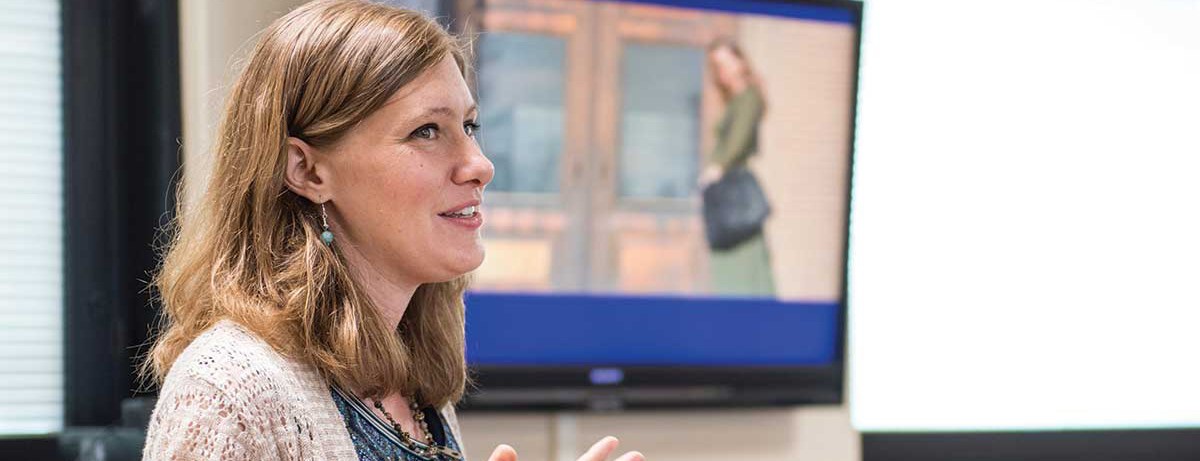
Featured photo of Bethany Yeiser by Colleen Kelley.
Impact Lives Here
The University of Cincinnati is leading public urban universities into a new era of innovation and impact. Our faculty, staff and students are saving lives, changing outcomes and bending the future in our city's direction. Next Lives Here.
Stay up to date on all UC's COVID-19 stories, or take a UC virtual visit and begin picturing yourself at an institution that inspires incredible stories.
Related Stories
Sugar overload killing hearts
November 10, 2025
Two in five people will be told they have diabetes during their lifetime. And people who have diabetes are twice as likely to develop heart disease. One of the deadliest dangers? Diabetic cardiomyopathy. But groundbreaking University of Cincinnati research hopes to stop and even reverse the damage before it’s too late.
Is going nuclear the solution to Ohio’s energy costs?
November 10, 2025

The Ohio Capital Journal recently reported that as energy prices continue to climb, economists are weighing the benefits of going nuclear to curb costs. The publication dove into a Scioto Analysis survey of 18 economists to weigh the pros and cons of nuclear energy. One economist featured was Iryna Topolyan, PhD, professor of economics at the Carl H. Lindner College of Business.
App turns smartwatch into detector of structural heart disease
November 10, 2025

An app that uses an AI model to read a single-lead ECG from a smartwatch can detect structural heart disease, researchers reported at the 2025 Scientific Sessions of the American Heart Association. Although the technology requires further validation, researchers said it could help improve the identification of patients with heart failure, valvular conditions and left ventricular hypertrophy before they become symptomatic, which could improve the prognosis for people with these conditions.