Fight or flight response may hinge on protein in skeletal muscular system
UC researchers hope to advance the understanding of skeletal muscular disorders

Researchers at the University of Cincinnati say a regulatory protein found in skeletal muscle fiber may play an important role in the body’s fight or flight response when encountering stressful situations.
The protein, fast skeletal myosin binding protein-C (fMyBP-C), plays a foundational role in the proper regulation of contractile structure and function in the body’s fast twitch muscles — these muscles produce sudden bursts of power to sprint into action, jump or lift heavy objects. Fast skeletal myosin binding protein-C modulates the speed and force of fast skeletal muscle contraction.
“This response is very critical for the higher animal and human survival. Just imagine, you are walking through a forest and suddenly you see a tiger in front of you,” says Sakthivel Sadayappan, PhD, a professor in the UC Division of Cardiovascular Health and Disease. “You will immediately act, either to fight or run away from the animal. For that action, fast muscle is essential, and fast myosin binding protein-C is the key molecule to regulate the speed of action.”

Sakthivel Sadayappan, PhD, shown in the UC College of Medicine. Photo/Colleen Kelley/UC Creative + Brand
Myosin-binding protein-C is a thick filament regulatory protein found in striated muscle in both the heart and skeletal system. The protein performs different functions in the two organs, regulating contractility in the heart and playing a role in the development of fast and slow muscle fibers in skeletal muscle tissue.
Sadayappan along with researchers at UC College of Medicine, Florida State University, the University of Massachusetts Medical School and the Illinois Institute of Technology published research in the scholarly journal PNAS to further the understanding of the protein in skeletal function and regulation. Their findings are available online.
The study’s lead author is Taejeong Song, PhD, a postdoctoral fellow in the Sadayappan Lab at the UC College of Medicine.
Song says that research examined the role of the protein in fast-twitch muscles by generating a knockout mouse — an animal in which researchers have either inactivated, replaced or disrupted the existing fast myosin binding protein-C gene to study its impact.
“We found that knockout mice demonstrated a reduced ability to exercise, showed less maximal muscle force and a diminished ability for muscle to recover from injury,” explains Sadayappan. “Our study concludes that fast myosin binding protein-C is essential in regulating the force generation and speed of contraction of fast muscles.”

Taejeong Song, PhD, poses in the UC College of Medicine. Photo/Colleen Kelley/UC Creative + Brand
Song says advancing the knowledge of fast myosin binding protein-C may someday assist in addressing skeletal muscular disorders.
“Individuals lose their ability of muscle force generation for various reasons,” says Song. “They may be extremely inactive or hospitalized for long periods of time. Aging may also be the cause for some. We also think if we can manipulate the workings of fast myosin binding protein-C in skeletal muscle that we can prevent or at least slow down the loss of muscle function in genetic muscle disease such as distal arthrogryposis. Our research is trying to figure out this problem in human health.”
Other co-authors in the study from UC include Lisa Martin, senior research assistant in the Division of Cardiovascular Health and Disease; Judith Heiny, PhD, professor of pharmacology and systems physiology; and John Lorenz, PhD, professor of pharmacology and systems physiology.
Additional co-authors include James McNamara, PhD, Murdoch Children’s Research Institute; Weikang Ma, PhD, Illinois Institute of Technology; Maicon Landim Vieira of Florida State University; Kyounghwan Lee, PhD, University of Massachusetts Medical School; Roger Craig, PhD, University of Massachusetts Medical School; Jose Renato Pinto, PhD, Florida State University; and Thomas Irving, PhD, Illinois Institute of Technology.
Sadayappan has received support from various National Institutes of Health grants, including the National Institute of Arthritis and Musculoskeletal and Skin Diseases, along with the American Heart Association. Song and McNamara were supported by an American Heart Association Fellowship training grant, while Craig has received grant support from the National Institutes of Health. The research study used resources of the Advanced Photon Source, a U.S. Department of Energy Office of Science User Facility.
Sadayappan provided consulting and collaborative research studies to the Leducq Foundation, Red Saree Inc., Greater Cincinnati Tamil Sangam, AstraZeneca, MyoKardia, Merck and Amgen. This work was not related to the content of the published study.
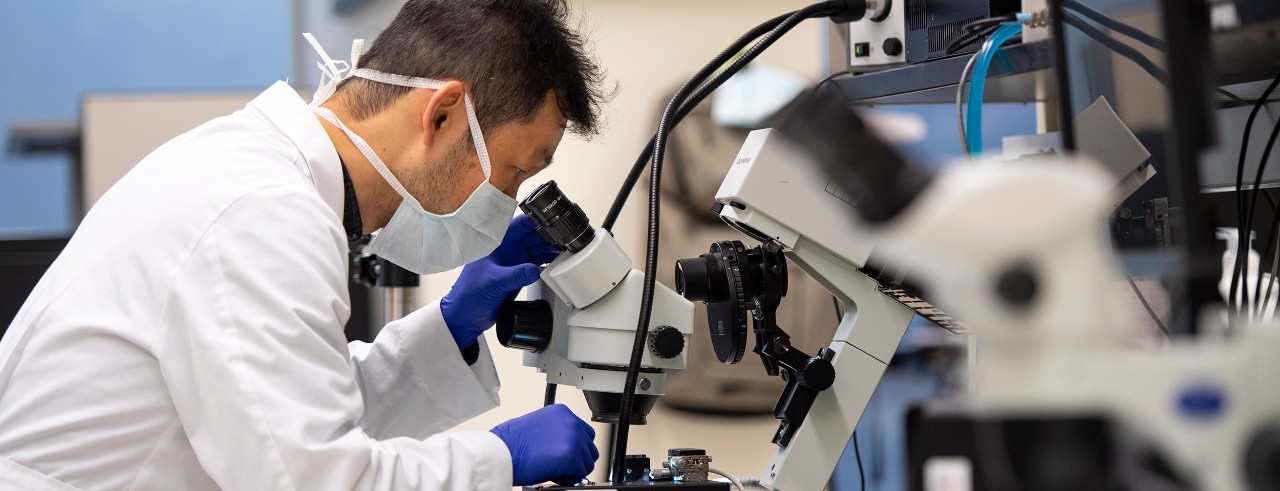
Featured image at top of Taejeong Song, PhD/Colleen Kelley/UC Creative + Brand.
Impact Lives Here
The University of Cincinnati is leading public urban universities into a new era of innovation and impact. Our faculty, staff and students are saving lives, changing outcomes and bending the future in our city's direction. Next Lives Here.
Stay up on all UC's COVID-19 stories, or take a UC virtual visit and begin picturing yourself at an institution that inspires incredible stories.
Related Stories
Sugar overload killing hearts
November 10, 2025
Two in five people will be told they have diabetes during their lifetime. And people who have diabetes are twice as likely to develop heart disease. One of the deadliest dangers? Diabetic cardiomyopathy. But groundbreaking University of Cincinnati research hopes to stop and even reverse the damage before it’s too late.
Is going nuclear the solution to Ohio’s energy costs?
November 10, 2025

The Ohio Capital Journal recently reported that as energy prices continue to climb, economists are weighing the benefits of going nuclear to curb costs. The publication dove into a Scioto Analysis survey of 18 economists to weigh the pros and cons of nuclear energy. One economist featured was Iryna Topolyan, PhD, professor of economics at the Carl H. Lindner College of Business.
App turns smartwatch into detector of structural heart disease
November 10, 2025

An app that uses an AI model to read a single-lead ECG from a smartwatch can detect structural heart disease, researchers reported at the 2025 Scientific Sessions of the American Heart Association. Although the technology requires further validation, researchers said it could help improve the identification of patients with heart failure, valvular conditions and left ventricular hypertrophy before they become symptomatic, which could improve the prognosis for people with these conditions.