CNN Business: It's been a year. Here's what your home office should look like
UC expert offers tips on having a proper home work environment

For the past year, people all around the world have had to adjust to the new normal for how they do their jobs from their homes. Creating a workspace that is functional but still maintains a good work/life balance can be challenging. In a story on the topic, CNN Business turned to Susan Kotowski, PhD, of the Department of Rehabilitation, Exercise and Nutrition Sciences in the UC College of Allied Health Sciences for some suggestions on creating a home work space.

Susan Kotowski, PhD, of the Department of Rehabilitation, Exercise & Nutrition Sciences in the College of Allied Health Sciences/Photo/Colleen Kelley/UC Creative + Brand
Kotowski, who studies occupational ergonomics and biomechanics, recommends getting an external monitor, keyboard and mouse, if possible. She says if you can't get all three external elements, you can improvise by raising the entire laptop to get the monitor to eye level and then get an external keyboard and mouse. Or, use the laptop's keyboard and mouse and an external monitor.
"If you think about a monitor being connected to the keyboard, you are almost always going to be looking pretty far down," says Kotowski. "Your neck is going to be bent pretty far down, so lots of upper back, shoulder discomfort, neck discomfort from that constant looking down."
And even if you have created the perfect home office, it's still important to take breaks—a lot of them.
"You want a change in posture no longer than every 30 minutes," says Kotowski. "So if you are sitting, change to standing or stretch. Get up and go fill your water bottle. Do something. It doesn't have to be very long and doesn't have to be unproductive."
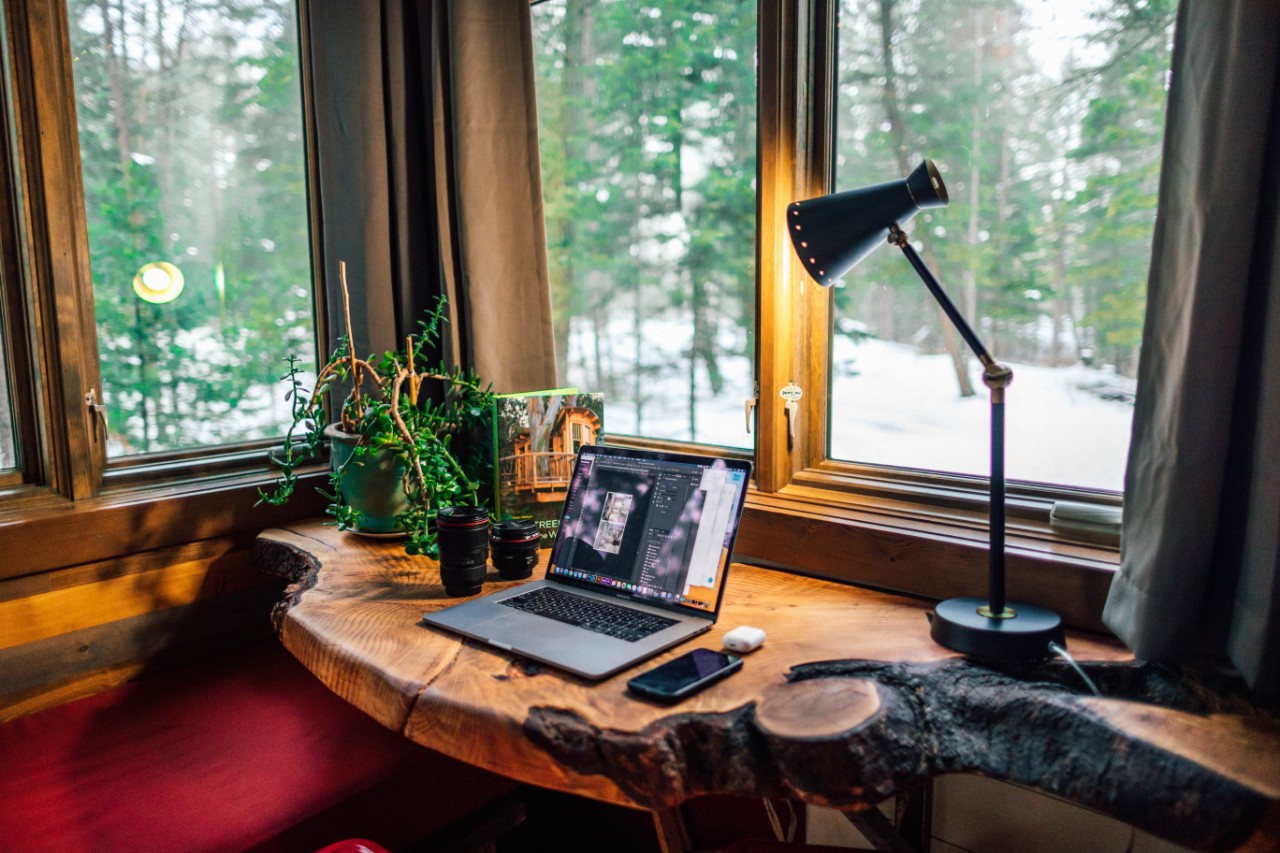
Lead photo/Roberto Nickson/Unsplash
Next Lives Here
The University of Cincinnati is classified as a Research 1 institution by the Carnegie Commission and is ranked in the National Science Foundation's Top-35 public research universities. UC's medical, graduate and undergraduate students and faculty investigate problems and innovate solutions with real-world impact. Next Lives Here.
Related Stories
Sugar overload killing hearts
November 10, 2025
Two in five people will be told they have diabetes during their lifetime. And people who have diabetes are twice as likely to develop heart disease. One of the deadliest dangers? Diabetic cardiomyopathy. But groundbreaking University of Cincinnati research hopes to stop and even reverse the damage before it’s too late.
Is going nuclear the solution to Ohio’s energy costs?
November 10, 2025

The Ohio Capital Journal recently reported that as energy prices continue to climb, economists are weighing the benefits of going nuclear to curb costs. The publication dove into a Scioto Analysis survey of 18 economists to weigh the pros and cons of nuclear energy. One economist featured was Iryna Topolyan, PhD, professor of economics at the Carl H. Lindner College of Business.
App turns smartwatch into detector of structural heart disease
November 10, 2025

An app that uses an AI model to read a single-lead ECG from a smartwatch can detect structural heart disease, researchers reported at the 2025 Scientific Sessions of the American Heart Association. Although the technology requires further validation, researchers said it could help improve the identification of patients with heart failure, valvular conditions and left ventricular hypertrophy before they become symptomatic, which could improve the prognosis for people with these conditions.