Eat This, Not That: Early signs you have COVID-19 now, according to doctors
UC ear, nose and throat expert discusses the loss of a sense of smell

Eat This, Not That reports that many Americans are less fearful of COVID-19 as cases drop. Officials from the Centers for Disease Control and Prevention worry that Americans will let their guard the pandemic may sicken or kill more individuals because of a false sense of security. The online nutrition publication reminded readers of possible signs of COVID-19 exposure. Among the medical experts quoted include Ahmad Sedaghat, MD, PhD, associate professor in the UC Department of Otolaryngology-Head and Neck Surgery and UC Health physician.
Sedaghat explained how the loss of a sense of smell is among the signs that distinguish COVID-19 from flu, allergies or other respiratory illness. Individuals have also reported fever, chills, cough, shortness of breath, difficulty breathing, fatigue, body aches, headache, congestion, runny nose, diarrhea, and vomiting. Sedaghat authored a study of COVID-19 patients that shows loss of the sense of smell is most likely to occur by the third day of infection with the novel virus. About 61 percent of COVID-19 patients in the study reported loss or reduced sense of smell.
"The mean onset for reduction or loss in sense of smell was 3.4 days,” says Sedaghat, also Director of the UC Division of Rhinology, Allergy and Anterior Skull Base Surgery. “We also found in this study that the severity of the loss of smell is correlated with how bad your other COVID-19 symptoms will be with worsening anosmia being linked to patient reports of more severe shortness of breath, fever and cough."
Read the full article from Eat This, Not That online.
Learn more about research from Ahmad Sedaghat, MD, PhD.
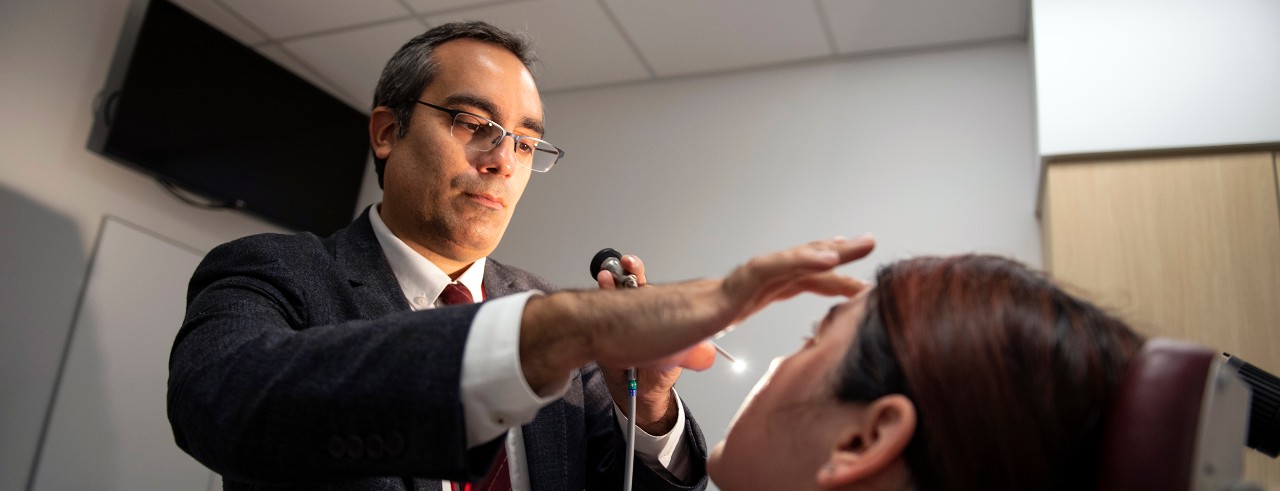
Featured image of Ahmad Sedaghat, MD, PhD, taken by Colleen Kelley/UC Creative + Brand.
Related Stories
Sugar overload killing hearts
November 10, 2025
Two in five people will be told they have diabetes during their lifetime. And people who have diabetes are twice as likely to develop heart disease. One of the deadliest dangers? Diabetic cardiomyopathy. But groundbreaking University of Cincinnati research hopes to stop and even reverse the damage before it’s too late.
Is going nuclear the solution to Ohio’s energy costs?
November 10, 2025

The Ohio Capital Journal recently reported that as energy prices continue to climb, economists are weighing the benefits of going nuclear to curb costs. The publication dove into a Scioto Analysis survey of 18 economists to weigh the pros and cons of nuclear energy. One economist featured was Iryna Topolyan, PhD, professor of economics at the Carl H. Lindner College of Business.
App turns smartwatch into detector of structural heart disease
November 10, 2025

An app that uses an AI model to read a single-lead ECG from a smartwatch can detect structural heart disease, researchers reported at the 2025 Scientific Sessions of the American Heart Association. Although the technology requires further validation, researchers said it could help improve the identification of patients with heart failure, valvular conditions and left ventricular hypertrophy before they become symptomatic, which could improve the prognosis for people with these conditions.