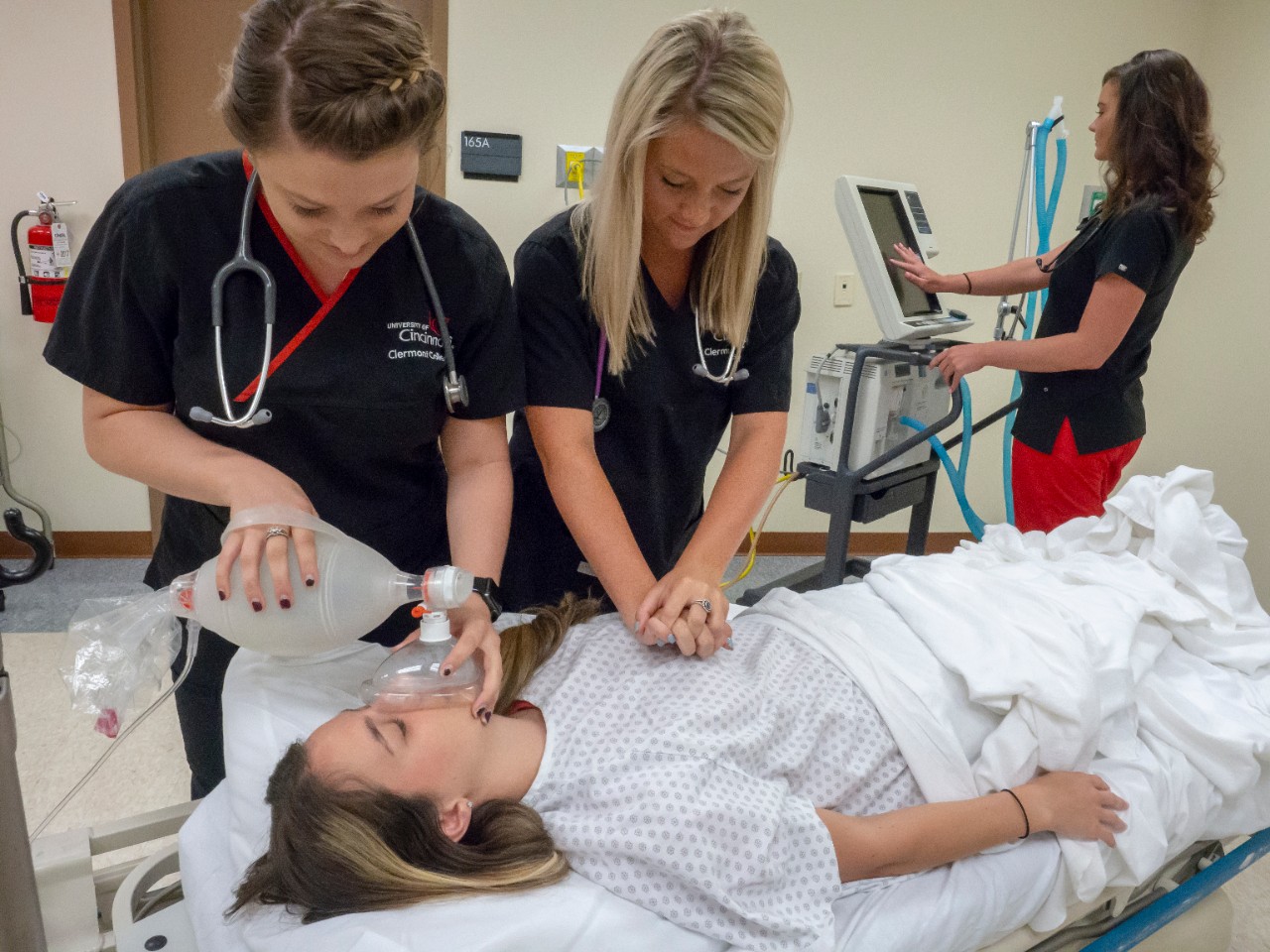
UC Clermont offers respiratory care info sessions
COVID crisis increases demand for respiratory therapists

Respiratory therapists have always been on the frontlines of working with patients with airway diseases such as asthma, pneumonia and COPD, and with premature infants who require support to breath. But COVID-19 — which counts breathing difficulties among its many symptoms — requires even more respiratory professionals.
“The COVID crisis has further increased demand for therapists trained in airway and lung disease treatment,” said UC Clermont Associate Professor Michael Mullarkey, who manages the college’s Respiratory Care program. “COVID patients in critical condition often need to be intubated and managed for long periods of time.”
As part of the University of Cincinnati, UC Clermont’s Respiratory Care program allows for a seamless transfer to the UC College of Allied Health completion program. This program enables UC Clermont graduates to earn their bachelor’s degree in respiratory therapy (BSRT) in less than two years — completely online.
“Our graduates score well beyond the national averages on their board exams,” Mullarkey said. “And 100 percent of them have received job offers during the last three years.”
For those interested in the program, UC Clermont will offer a series of free virtual information sessions in January and February. Visit https://ucclermont.edu/respiratory-care.html for info session dates, times and RSVP links. For questions, contact Associate Professor Michael Mullarkey at michael.mullarkey@uc.edu.
Tags
Related Stories
Sugar overload killing hearts
November 10, 2025
Two in five people will be told they have diabetes during their lifetime. And people who have diabetes are twice as likely to develop heart disease. One of the deadliest dangers? Diabetic cardiomyopathy. But groundbreaking University of Cincinnati research hopes to stop and even reverse the damage before it’s too late.
App turns smartwatch into detector of structural heart disease
November 10, 2025

An app that uses an AI model to read a single-lead ECG from a smartwatch can detect structural heart disease, researchers reported at the 2025 Scientific Sessions of the American Heart Association. Although the technology requires further validation, researchers said it could help improve the identification of patients with heart failure, valvular conditions and left ventricular hypertrophy before they become symptomatic, which could improve the prognosis for people with these conditions.
Combination immunotherapy helps overcome melanoma treatment resistance
November 10, 2025

MSN highlighted research led by the University of Cincinnati Cancer Center's Trisha Wise-Draper showing a combination of immunotherapy medications can activate a robust immune response and help overcome treatment resistance in patients with refractory melanoma.