Medical school applications jump during pandemic
More out-of-state-applicants eyeing the College of Medicine

The University of Cincinnati College of Medicine is seeing an uptick in medical school applications in the midst of a pandemic.
More than 6,000 applicants or a 20% increase over last year are competing for 180 positions in the UC medical school, says Abbigail Tissot, PhD, assistant dean for admissions and recruitment for the College of Medicine.
“For the most part the majority of these additional applicants are out-of-state residents,” says Tissot. “Realistically, I think we are seeing people say, ‘I am going to apply to more medical schools so I can join the profession of medicine.’”
Nationally, the medical school applicants are up 18% this year over last year, according to the Association of American Medical Colleges (AAMC). Some say that increase is driven by the example of medical workers and public health figures such as Anthony Fauci, MD, director of the National Institute of Allergy and Infectious Diseases.
Tissot says UC may also be benefiting from its homegrown talent stepping to the forefront to battle COVID-19.

Abbigail Tissot, PhD, assistant dean for admissions and recruitment for the College of Medicine.
"We have seen our application numbers inching higher consistently for years,” says Tissot. “So, I think, the reason our 20% increase is higher than the national average is because of how instrumental researchers and clinicians at UC and UC Health have been in battling COVID-19. Out-of-state applicants are seeing that UC is a leader in a lot of ways and they want to be aligned with places that are making a difference in addressing this pandemic.”
“They recognize that being on the front lines and being a leader in changing our nation’s short-term outcomes is what they want to do and they are inspired by the Cincinnati researchers and clinicians who are doing that,” says Tissot.
Researchers and clinicians at UC and UC Health have played a major part, working around the clock to study the coronavirus — from transmission to treatment and beyond — with hopes of ending the pandemic sooner than later.
UC experts were interviewed by local and national media about early COVID-19 symptoms, participation in clinical trials, the disease’s impact on the cardiovascular system as well as the lungs and for offering guidelines to keep families safe during the pandemic. UC faculty also are examining the pandemic’s impact on communities across the nation along with lending their voices to public health experts encouraging residents to vaccinate to limit the spread of COVID-19.
“I am seeing medical school application essays where people who had planned to do community service are now doing it in different ways by volunteering to assist individuals at greatest risk for COVID,” says Tissot. “These inspired young people are helping with groceries and pharmacy pick-ups.”
“Others are finding ways to safely tutor young students who need additional help during the pandemic,” says Tissot. “Applicants are negatively affected by the pandemic but they want in turn to have a positive impact on society. Those are exactly the kind of people UC has always sought to recruit to the medical profession.”
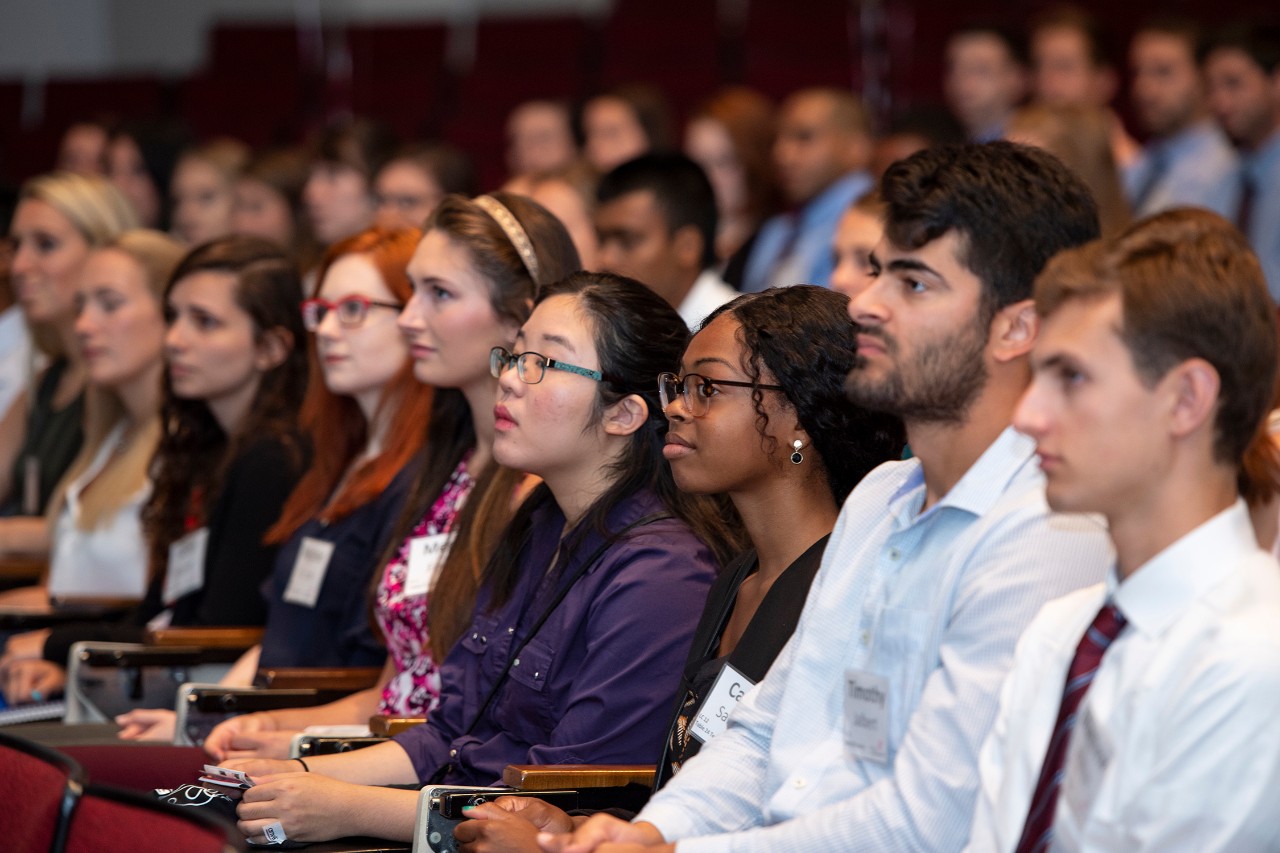
Featured image of medical students during Orientation Week 2017 at UC. Photo by Colleen Kelley/UC Creative + Brand.
Impact Lives Here
The University of Cincinnati is classified as a Research 1 institution by the Carnegie Commission and is ranked in the National Science Foundation's Top-35 public research universities. UC's medical, graduate and undergraduate students and faculty investigate problems and innovate solutions with real-world impact. Next Lives Here.
Related Stories
Sugar overload killing hearts
November 10, 2025
Two in five people will be told they have diabetes during their lifetime. And people who have diabetes are twice as likely to develop heart disease. One of the deadliest dangers? Diabetic cardiomyopathy. But groundbreaking University of Cincinnati research hopes to stop and even reverse the damage before it’s too late.
App turns smartwatch into detector of structural heart disease
November 10, 2025

An app that uses an AI model to read a single-lead ECG from a smartwatch can detect structural heart disease, researchers reported at the 2025 Scientific Sessions of the American Heart Association. Although the technology requires further validation, researchers said it could help improve the identification of patients with heart failure, valvular conditions and left ventricular hypertrophy before they become symptomatic, which could improve the prognosis for people with these conditions.
Combination immunotherapy helps overcome melanoma treatment resistance
November 10, 2025

MSN highlighted research led by the University of Cincinnati Cancer Center's Trisha Wise-Draper showing a combination of immunotherapy medications can activate a robust immune response and help overcome treatment resistance in patients with refractory melanoma.